Showing posts with label Leadership. Show all posts

Wednesday, 13 June 2012

At risk of being coached?

I met someone earlier this week and we were talking about coaching. The conversation turned towards how some practitioners take a very purist stance towards coaching and how others don’t. 

In this instance, a purist stance would be what is often termed “non-directive”. That is to say that the coaches role is purely to ask open questions without directing the client, using the clients own language... The main principle is that the coach does not in any way provide advice or direct the clients actions. 

To be pedantic there is no such thing as “non-directive” in any human interaction but that’s another blog! 


Whose Risk? 

I’m not knocking the spirit or the practice of “non-directive” coaching. However, this isn’t always what a client wants. In an organisational setting it’s not always what a client needs. So who decides? 

Take for example a manager who is having trouble performance managing members of staff. The purpose of the coaching & the contracting with the coach is focussed on improving the managers ability to deal with performance situations. 

In the coaching conversation, the manager decides to take a course of action that to an informed outsider would clearly put them & their organisation at risk – say unfair dismissal. 

If the “non-directive” coach, identified the risk how could they intervene and remain “non-directive”? It’s a perfectly reasonable & professional practice in any form of coaching (or mentoring) to seek permission to “take off the coaching hat” to offer thoughts or reactions. However, for a purist coach to do this in some way would seem to undermine the whole purpose of being “non-directive”. 

Here’s another perhaps more important issue. What would happen if the “non-directive” coach didn’t appreciate the risk being taken. After all this is not what they were employed to do. Could they become complicit with reinforcing the clients’ agenda and decision to take a detrimental course of action? 

Who decides what a clients wants and what a client needs? Whose risk is it? 


The ill advised need sound advice 

Coaching is not about giving advice. However, it is about care for our clients. 

Fundamentally, no amount of “non-directive” coaching will help the ill advised follow a safer course of action. In fact, the above example shows that “non-directive” coaching may even enforce their stance. 

In any other walk of life, it’s hard to imagine a paid professional sitting across from their client and letting them pursue a course of action that would put them at peril without raising their own concerns. 

Perhaps this is why organisations tend to “buy” coaches with industry & leadership experience rather than purely coaching qualifications. 


Does purist coaching make sense in organisations? 

I can’t say never, but I have a long standing concern...

Even though we always strive to help our client determine their own agenda and actions, coaching is a human interaction. Human interactions require us to give of each other and see each other - @Projectlibero puts this very eloquently here.

In organisations, we are working in systems where potential risks and consequences of our actions can be amplified. If we don’t share our care and concerns do we potentially put our clients at risk? 

What do you think?

Thursday, 24 May 2012

Beecroft – Who is Under Performing?

OK there’s a lot being written about the Beecroft Report at the moment and I’ve hesitated to write anything at all. However, there’s an important aspect to this story which just doesn’t seem to be coming out loudly. Who is underperforming? 

Current perspective 
The Telegraph’s story yesterday included a headline saying : 

“The majority of employers back controversial proposals to allow “no-fault dismissals” for under-performing workers, a survey has revealed.” 

The story then reveals it’s not the majority of employers – it’s the 1,100 respondents to an IoD survey where 76% backed the proposals. The director-general of the Institute of Directors, Simon Walker, is quoted as saying : 

“Our members prefer Beecroft’s ideas on unfair dismissal to the watered-down model being promoted as an alternative, so the Government should not waver”. “Beecroft’s changes to dismissal procedures would reduce regulatory burdens and encourage businesses to recruit more people — anything less would have a considerably weaker effect.” 

I’m not going to assume what the UK business community do or don’t feel about the Beecroft report. Plenty of others are already doing this. However, the positioning of the promoted benefit to business overlooks a fundamental part of good business. 

This is not really about business growth is it?
If you are planning to grow your company through recruiting more people then your focus is on growth not the regulatory burdens of removing staff at some theoretical point in the future when they have failed to perform. So “the story” here to a large extent doesn’t really deal with the dynamics of successful businesses enjoying growth. 

The issue is then more one of how you can replace under-performing staff in businesses regardless of their economic success. The process of staff replacement may on occasion be business enhancing… it could involve recruitment… but the net effect is not necessarily greater employment or business growth, in the short term or possibly ever. 

Are the headline grabbing stories persuading us to think of the Beecroft report as a way to business growth? Possibly… regardless, this not about business growth in successful businesses is it? 

This is about underperformance. By whom? 
There are a multitude of reasons why staff may under perform. However, if you can’t deal effectively with someone who is underperforming with current legislation etc. then what does it actually say about you as a business or as a manager? 

In my experience, it’s those who can thrive through adversity who are successful. 

If you can’t effectively deal with under-performance in your business today, then can you actually nurture great performance through people at all? 

Could revised legislative changes help perpetuate underperformance of managers who are not able address performance through developmental conversations? 

The Irony of Beecroft
Have you seen the reported explanation from Adrian Beecroft of what/who influenced his thinking… 

“It is actually a human resources director whom Mr Beecroft was once forced to dismiss, an experience that made the venture capitalist determined to reform the system. “We had an HR man who was very good at the technical stuff, but hopeless with people so we dismissed him, having thought we’d gone through the process,” Mr Beecroft explains. The company then placed an advert for a replacement who was “good with people”. “And he sued us for discrimination on the grounds that everybody knows that people who are good with people means we want a woman. We went to the lawyers and said this is ridiculous and they said we’d have to pay and so we paid him.” The £150,000 payoff that Mr Beecroft’s firm had to make to the under-performing employee was, he says, a typical experience for entrepreneurs and small business owners. Many people simply do not bother to hire because of the problems it can cause, he claims.” 

What is not said by Mr Beecroft is how his firm managed:
  • the hiring decision/process. 
  • the performance management process. 

Then what is said but won’t be addressed by his recommendations… 
  • the bone of contention being an issue of discrimination.

It’s easy to read this and think red-tape & legislation led to an extortionate payout of £150k… the reality is that perceived or actual discrimination led them to settle out of court as the lawyers must have perceived there was a risk of being found wanting in a tribunal. 

Ironic isn't it? What does this say about his firms ability to lead and manage people let alone manage their performance?


Recommended Further Blog Reading 

Wednesday, 9 May 2012

HR - Saviour of the Universe


It feels like nearly every week I see a blog post, discussion or tweet about how HR are going to be the saviours of the working world... how HR will revolutionise & humanise the workplace... how HR are going to save the universe...

Similarly, there's a constant stream of conversation about HR becoming more strategic & commercially focused; gaining a seat at the table...

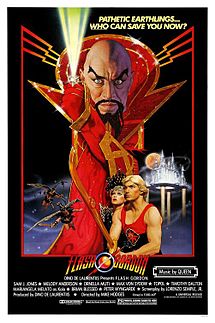
Perhaps they are laudable aspirations but sometimes it just feels a bit like a Flash Gordon plot...  Ming the Merciless is going to destroy us but Gordon will be our saviour!

Maybe it's a generational thing but surely corny 80's fantasy film plots and Queen songs weren't this influential?!?

Role Model Reality
Every great HR professional I work with just gets stuck in and makes the difference. There's no running around after the "shiny-shiny". There's no quantum leap to their blue sky thinking.

They earn their respect and place in the organisation through their actions and their quality of thinking.

Sometimes they are innovators.  Sometimes early adopters. Being an aspirational thought leader is not as important as being a good leader.  

They are trusted advisors and role models.  When they can't make a difference, they move on. They have purpose.

That's my experience; my reality.  What's yours?

The Blessed Effect
In the spirit of being lighthearted but serious this post has to be concluded with a very short clip of the quite wonderful Brian Blessed.  Perhaps HR could sometimes do with a bit more of him instead!

Friday, 16 March 2012

Friday Wondering - Does HR need courage?


Each Friday I'm posting a "Friday Wondering". These posts are meant to explore & discuss observations or issues which I think would benefit from discussion. Participation is open to absolutely anyone regardless of their expertise or knowledge. Just bring your curiosity!

If you'd like to discuss on Twitter rather than here then why not. It would help though if you could use the #FridayWondering hashtag. Thanks!

Does HR need courage?
I've noticed that many of my conversations with people in that broad house called HR have touched upon the need to act in their roles to break the norm.  To stand up to management.  To change the status quo.  To lead by example.  It often takes courage to be a leader of change.

However, the situations recounted often reflect the fact that senior management don't have the courage to change themselves.

So what do you think?  Does HR need to have courage to perform it's role fully?
Would acting with courage lead the way or would it give permission to other executives to follow rather than lead?

Thursday, 26 January 2012

Warnocking & Leadership

Even if you don’t work in the HR space, you know that feedback is important. It’s how we learn & develop. If it’s well delivered, feedback is engaging. It’s a gift.

Warnock’s Dilemma 
Those of you who blog may be familiar with the phenomenon that is called Warnock’s Dilemma. If you are not then there is a good description on Wikipedia here and even a dedicated website here. 

The problem it describes comes from a lack of response to a posting. Any blogger will be familiar with posts that don’t attract comments – sometimes it can be quite discomforting. Warnock’s Dilemma explains this lack of feedback as being for 1 of 5 different reasons: 
  1. The post is correct, well-written information that needs no follow-up commentary. There's nothing more to say except "Yeah, what he said." 
  2. The post is complete and utter nonsense, and no one wants to waste the energy or bandwidth to even point this out. 
  3. No one read the post, for whatever reason. 
  4. No one understood the post, but won't ask for clarification, for whatever reason. 
  5. No one cares about the post, for whatever reason. 
Whether you blog or not, it all makes perfect sense doesn’t it… so what? 

Well, have a think about the 5 different reasons and replace the word “post” with “Executive Communication”. It’s a slightly different perspective isn’t it... More than that, I think it perhaps illuminates some broader issues. 

Leaders hide their discomfort 
We know that dealing with ambiguity is part of the leadership role, along with the need for strong communication skills. 

Often this means we develop leaders who are able to function without much feedback and are able to communicate strongly, sometimes perhaps in a way that even stifles feedback. I suspect that the combination conspires against leaders receiving the feedback they need, as humans. 

To not get the feedback you need as a human. That would feel discomforting wouldn’t it? Shouldn’t it? More than that, doesn’t that lack of feedback limit learning and development? 

Organisations that recognise this develop leaders to have strong reciprocal communications skills and can both give & elicit feedback effectively.

Take a look around your organisation. I’d guess there may be leaders you can see who don’t function at this level.  Are they learning & developing as they need to? Are they hiding their discomfort? 

Warnock’s Dilemma is incomplete 
Warnock’s Dilemma is great but it’s important to recognise its origins are in the online world of forum posting 10 years ago. I believe there are 4 other reasons people don’t contribute to postings & blogs which we already understand from the corporate world. 
  • The post is good/bad but the writer is weak at eliciting feedback. 
  • The post is good/bad but the readers’ feedback skills are weak. 
  • The post is good/bad but the reader has no time to comment. 
  • The post is good/bad but the reader does not care enough about you to “gift” you their feedback. 
I think these are accurate additions but test them. Replace the word “post” with “Executive Communication” or something else that you find relevant. 

What do you think? What else would you add to Warnock’s Dilemma? 


Self-Leadership Postcript 
If we are interested in feedback and dialogue on ourselves then I believe it helps to be aware of the various reasons why others may not comment. The issue could be us; it could be others; it could just be circumstantial.  If we feel discomfort or are not getting the feedback we need then the only positive remedy is to solicit feedback from people whose opinion we care about. 

If we read the work of others who actively or passively seek feedback & comments, what stops us from doing so? Feedback is a gift. If you are time poor then why not find quick ways to share your sentiments? If you disagree why not tell the author?   If you don’t care then why are you reading their work – really think about why.

As leaders or advocates of feedback we know the value of walking the talk.  How much walking the talk do you need to demonstrate in the world of social media?

It’s a personal decision but perhaps this really is the dilemma that comes from Warnock....

Thursday, 1 December 2011

The one where the "Boot" was on the other foot – Part 3 "The Way we Act"


Last week I was invited to join a demonstration day with TrainersKitbag (@trainerskitbag) and in yesterdays blog here I talked about my reflections from the day focussing on “The Way we Think”.  In today’s blog I’d like to share my reflections on how we act.
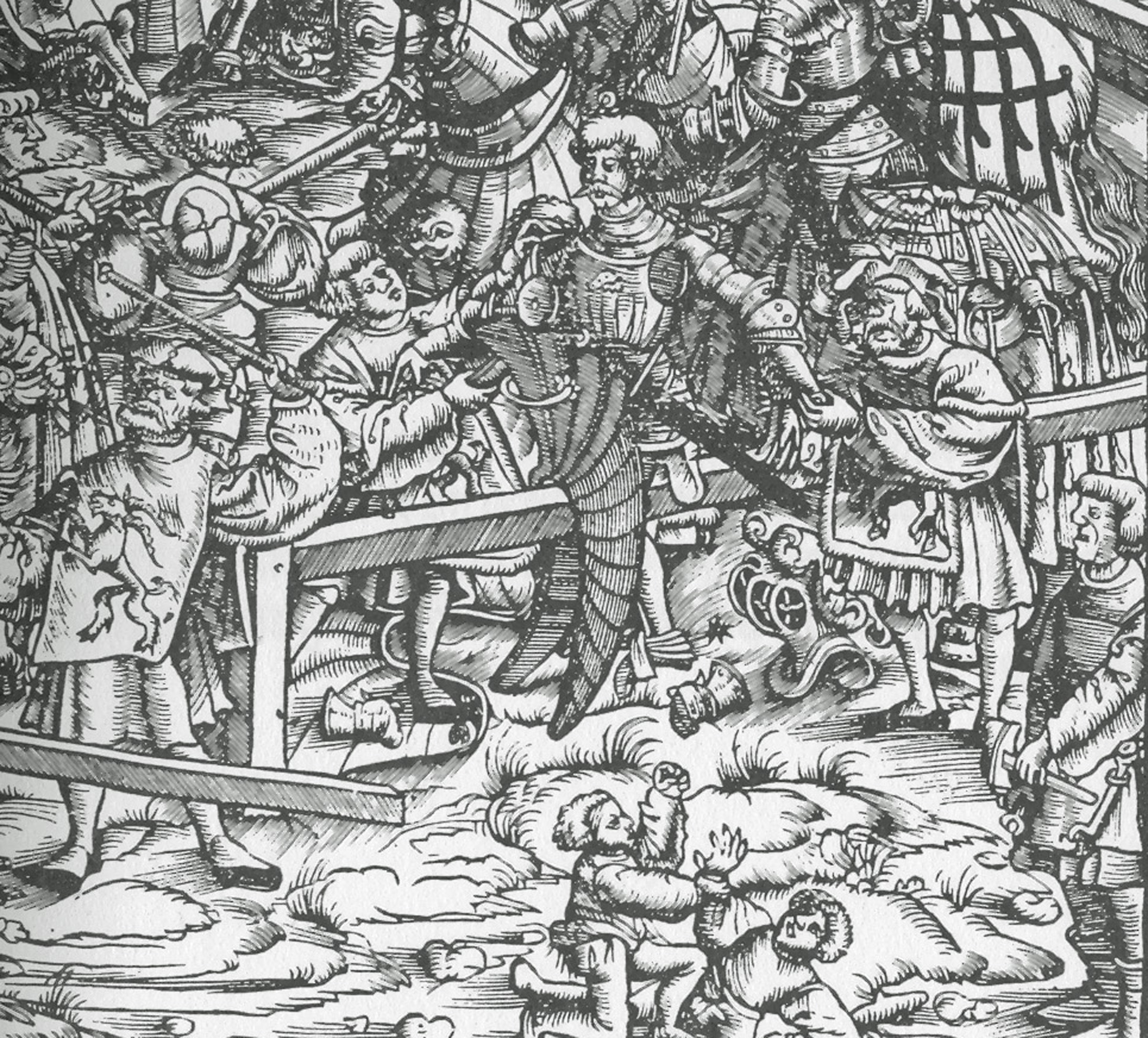
By Herzog Hans, Pfalzgraf, Graf zu Spanheim, via Wikimedia Commons*

Part 3 “The Way we Act”
When put into a situation such as game play we’re often debriefed afterwards about how the players could have acted more successfully.  Sometimes it’s simple task oriented things:
  • At the very start, take 15 minutes to discuss/agree a strategy.
  • Make sure you assign roles or a leader.
  • Periodically take a moment to review your plans & actions.

Sometimes it’s a little more complex as we look at behaviours and interactions:
  • Be aware of the team dynamics.
  • Take time to understand the personality types in the group.
  • Use a range of communications styles to bring across your point.

All of these have merit and the great value of the facilitator/coach in such team situations is that they can independently observe your actions & behaviours.  With trust the facilitator/coach can create the right degrees of tension and challenge to raise awareness and help facilitate change.

The way we can act with skill
On the demo day, you’d think that our team of seasoned professionals shared & followed the best practice that we know & love.  Well not exactly…by and large we just got stuck in!

We knew that developing a strategy for the game at the start was an appropriate thing to do but we chose to take action first and then strategise on our way.  We didn’t assign roles at all.  We reviewed our actions constantly.  We were still very successful in our tasks.

So what was going on that allowed us to apparently ignore the textbook rules?  Well I think two things:
  1. We were already familiar and practised at working in such team environments.  I wouldn’t say we were masters (read here) as such but we were able to trust our intuition (read here) and break some of the "rules".
  2. We had a number of enabling factors working in our favour (read here) which when combined with our experience created successful behaviours.

In hindsight, where I think we could have improved was in terms of a deeper strategy conversation around 20 minutes into the exercise.  This wouldn’t have changed our next actions but it may have helped relieve some of the effort we had to make towards the end of the day.

On reflection I think my message here is to pay attention to best practice.  However, if you are practiced and able to employ successful behaviours then go with your intuition.  Feel free to break some rules – it might be the only way to beat the rest!

Would love to hear your views and stories on rule-breaking!

*This 16th century image describes the punishment at tournaments for breaking the rules - the delinquent was put across the fence of the tournament area and beaten!  Nowadays, we might worry that the equivalent of this will happen to us but in reality we are only ever "punished" by our lack of skill or fear itself.

Tuesday, 29 November 2011

The one where the "Boot" was on the other foot – Part 2 "The way we think"


Last week I was invited to join a demonstration day with TrainersKitbag (@trainerskitbag) and in yesterdays blog here I talked about my reflections from the day focussing on “The Roles we Play”.  In today's blog I’d like to share my reflections regarding Intuition.

Part 2 “The way we think”
I have to say that I had only a rudimentary idea of what the demo day would involve, let alone the outcome or potential business impact.  Yet I knew the day was a great opportunity and I felt that it would be a valuable experience – I just didn’t know how.

If I had to justify the business value of the demo day to a “higher authority” my analytical, cognitive mind probably would have struggled.  However, my intuitive mind knew this was the right thing to do.  As it turned out, it was exactly the right thing to do.

Furthermore, during the demonstration day our team of 3 relied heavily on intuitive thinking with successful results.  At times, we would consciously and methodically solve a problem.  Other times we “just knew the right thing to do next” but couldn’t say why or how we knew it to be correct.  The hunch, instinct or gut reaction was evident throughout the day and in much of our problem solving activity.

The way we think we think
Ever asked yourself how you come to the decisions that you make?  The chances are that if you tried to describe it to someone you’d probably come up with a perfectly rational description of a thought process.  It might even look like a step by step process of “how to think”.

A lot of what we do in the workplace is based on an expectation that there is a rational, cognitive, analytical description of what to do.  We interview to a set of criteria… we make investment decision based on xyz parameters… we work to a set process… you get the idea.

Yet, if you spent time on this you’d probably describe some of your decision making as “if it feels right.. go ahead.”, or “if it smells a bit fishy… leave it alone.”.  How can a decision or thought feel or smell?

The reality is that these are not just colloquialisms – they describe our non-analytical judgement. They describe our instinct or intuition.

The Neuroscience opportunity
The study of neuroscience is bringing our understanding of the brain on leaps and bounds.  Much of this new understanding is relatively recent but is helping to explain how our analytical & intuitive thinking processes work.  Yet management & leadership awareness appears to be relatively low and training & development programmes have not yet caught up.

If intuition is such a part of how we function then isn't it something managers & leaders should take time to understand?

There is a huge business & social opportunity here for those who have the interest in looking at what is coming out of neuroscience.  Personally, I see furthering my understanding as part of my professional development and even adding to my professional practice.

However, I’m not a neuroscientist so I won’t try to be one.  If you are interested in the subject of Neuroscience or specifically intuition then I recommend reading this and this by Matthew Lieberman.  You might also find the NeuroLeadership Institute blog interesting.

If these are too “hefty” or you’d just like to learn in a more experiential environment then drop me a line and I’ll happily put you in touch with Neuroscientists that I’ve been working with.


In the meantime, I'd love to hear your thoughts on intuition and the opportunity Neuroscience can provide business leaders.

Monday, 28 November 2011

The one where the "Boot" was on the other foot – Part 1 "The Roles We Play"


Last week I was invited to join a demonstration day with Trainers Kitbag (@trainerskitbag).  They’re a great organisation providing a range of innovative games, events & simulations.

The day was designed to try out their “Property Trading Game” product and spend quality time with the Trainers Kitbag team and other practitioners.  Although I’ve used games with clients I have to say it’s been around 5 years since I was last in such a situation myself.  So the opportunity to learn more about how I would interact & impact with strangers in such a situation was compelling!

The game itself is very carefully and well designed - you can read more about it here and here.  It's something I'll be using with clients in the new year.

Over the next few days I’d like to share with you my reflections from the day starting with...

Part 1. “The roles we play”
In most game play, the roles that we take or respond to provide learning in terms of both our preferences as well as how we interact with others.  It’s a great way of highlighting norms, blindspots, hidden talents & limitations.  Reflecting on our actions and impacts provides rich learning.

In our team for the demo day, all 3 of us are running our own businesses, each with successful corporate careers and many years experience.  We’d never worked together and had either never met or had only recently become acquainted.  I don’t think any of us had come knowing how to play the game in any sense.  However, we were in it to win!

The way teams often work (or don’t)
So you’d expect some roles or preferences to become apparent wouldn’t you?  Some conflict or robust discussion maybe?  Perhaps a crisis out of a mistake or failure?  That drive to win must come out in some way surely?

With an existing team or with internal peer competition I’m sure this is exactly what would have transpired throughout the day.  The impact of “Joe” taking control but not attending to others perhaps.  The way decisions were handled by “Mary”.  The silence of “Pat” who was always on the periphery but unable to assert the great insight they held.

You can already get a sense of potential issues that might arise and so provide the opportunity for observation, reflection & learning.

The way teams can work
Well our team “BOOT” (yes, it’s inspired by the game Monopoly) challenged those expectations completely!
Throughout the day there was no visible hierarchy, no formal leadership roles and utter teamwork.  OK, so we took turns to hold the map!  We spoke up when we had an idea – see our work profile above!  In some tasks our preferences inevitably showed – whose wouldn’t!

Yet, there was no conflict or dominance or muted participation.  We achieved highly both as a team as well as in terms of the game itself.  Here’s how:
  • We always listened to each other, carefully and with care.
  • We were respectful of each other throughout the day.
  • We welcomed & recognised the strengths each brought to the challenges.
  • None of us tried to act as leader. We all led together.
  • We celebrated when we won.  We moved on when we lost.
  • No one was left behind.
  • We had fun!

I’d be worried about this self-assessment if it wasn’t for the fact that we were so successful and we know where we could improve!

Reinforcing the above, there were also some clear and critical team enabling factors which created the environment for these behaviours:
  • A strong desire and motivation to work together.
  • A shared team objective.
  • Similar ethics & values – although unspoken these came out in our actions.
  • Successful compatibility – through luck or perhaps synchronicity we worked well together


So looking at the "roles we play", I believe these are often the issue.  More to the point the way we choose to exercise those roles and our perceptions of others' roles.

What is critical to success is how we behave and the values that we hold.

What are your thoughts and experiences of successful teams?
What behaviours do they exhibit?
What enables them to succeed?

Wednesday, 23 November 2011

Twitterethics


Perusing the “Activity” function last night on Twitter, I noticed that someone I was following had just followed what is best described as a porn tweet account.  I didn’t even know they existed!

Anyway, I don’t know this person but I’m interested in their business.  They are the founder/CEO of a major people change organisation which relates closely to my own work.  Seeing that they actually use Twitter and that we have networks in common we ended up following each other.

Ethics in the moment
What happened next was spontaneous.  I unfollowed them.

Immediately after I found myself questioning whether I was being prudish.  Did it actually matter if this person, like many others, liked pornography?  I’ve not felt the need to unfollow anyone because of an ethical issue.  Yet this felt like one.

On reflection, I’m surprised at their stupidity of publicly following a porn tweet account.  I don’t see a place for this in business or professional circles and I don’t believe such actions build the right type of engagement.  Personally, I don’t want to be associated with people on Twitter who do.

Looking at their client list I think they are playing with fire.  It’s the kind of action that can lose you business with clients who care about their reputation & associations.

A learning experience!
I have my own ethical standards and values but I don’t force these upon others.  I think I’m very much a live and let live kind of person.  This just felt wrong to me.

Yet I have to say I’ve never experienced Twitterethics before.  So I want to share my actions & thoughts for your scrutiny!

What are your thoughts?
What would you have done?
What ethical dilemmas have you faced on Social Media?

Would love to hear from you!

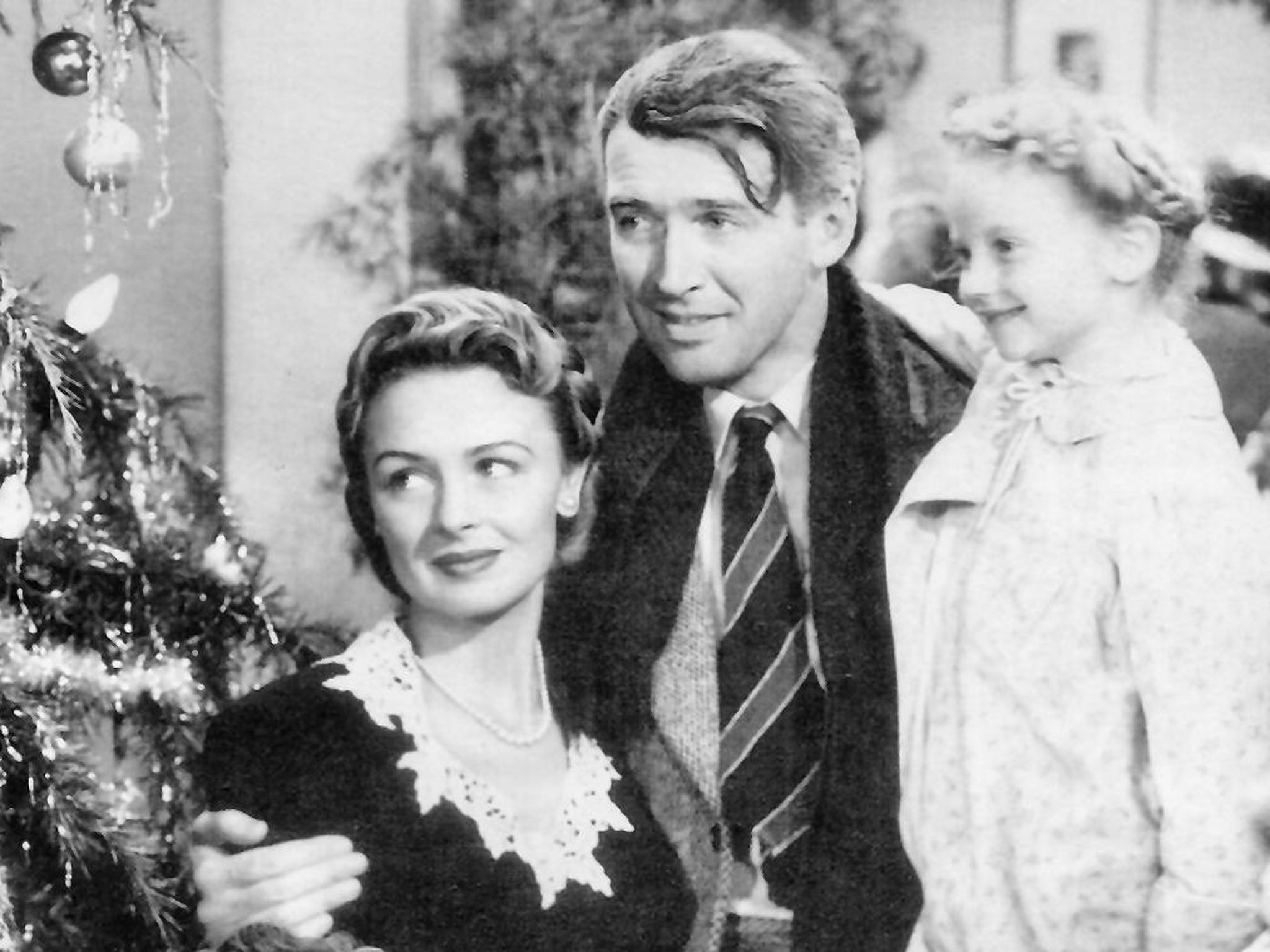
It's a Wonderful Life

By National Telefilm Associates (Screenshot of the movie) [Public domain], via Wikimedia Commons

Each Christmas Eve we watch “It’s a Wonderful Life”.  Wonderfully sentimental & full of humanity, it’s a classic film and seems to be a great reflective way to start Christmas and be appreciative for what we have.

The other morning, there was an interview on the radio with Karolyn Grimes who played little “Zuzu” - I think she might be the only surviving cast member from this 1946 film.

Wisdom at work
In the interview, she described how she learnt on the film-set from people like of James Stewart & Frank Capra that it’s OK to make mistakes.  As a 5/6 year old child actress, I think such support and teaching must have had a profound & lasting influence on Karolyn.

She also touched upon the moral outlook of the banker “George Bailey” in the film played by James Stewart.  Karolyn shared these core observations about his character:
  • He cares about the people working and helping the bank to survive
  • He has a heart & a system of ethics
What caught my attention here was a sense of wisdom which has been passed down and has endured despite Karolyn's remarkable & tragic life.  For me I think the following quote from her captures this well:

"There have been adverse things happen in my own life, but there are balances out there. And the movie itself has affected my life so much because I have George Bailey's philosophy … that friendships and caring and loving will carry you through anything ... I really feel like Zuzu is kind of a mission maybe, I don't know. I think that there is a higher power at work and that I had to go through a lot of adverse situations in my life to understand other people's pain."

Wisdom & work
I’m taking a few things from this which I think we can reflect upon in our work:
  1. Our employees, supporters & clients are our true fans.  Care deeply for them and they will reciprocate, sometimes in quite amazing ways.
  2. We are all challenged at some time during our lives.  In adversity, it’s not our commercial acumen that drives our survival it’s our friendship, our caring & our love.  It might sound “soft” but on personal reflection these factors have always been significant for me.
  3. A system of ethics drives our behaviours.  Our true fans probably recognise them already in our actions.  Perhaps we should do more to recognise them ourselves and state them explicitly. 

I think the sentiment here is best described by the angel "Clarence" at the end of the film.  He has left "George Bailey" a copy of the book Tom Sawyer and in it the message reads :

"Dear George: Remember no man is a failure who has friends.
Thanks for the wings! Love Clarence."

Thursday, 22 September 2011

Change


Tonight I attended another great talk by Marie de Guzman & Damon Newman from The Mangrove Neuroscience Consultancy.  A packed out CMI audience in central London was representative of the high interest there is in the market for understanding change at the individual level.

Marie in her talk raised three observations about change which I think are critical for business leaders and those involved in managing change:

Change Failure
The Economist Intelligence Unit reported earlier this year that “on average only 56% of change initiatives are successful”.  This report was based on responses from 288 senior executives, over 75% of which came from organisations with revenue of greater that US$1bn.  These are big players and they are saying that nearly half of their change initiatives fail. You can read the report in detail here.

Historically, I’ve heard figures of 70% being the working number for failed change programs.

What it tells us is that for all the process and investment organisations make, they are not very good at executing change and realising the intended success.

Change Blindness
Before you go any further, take 5-6 minutes or so to watch this video from the BBC “Brain Story” programme.
Isn’t it amazing that 75% of people in the experiment with the switched guy(s) didn’t notice anything!  Marie describes this blindness as extremely relevant in the Change context.  When you’ve got your head down managing change, you are not looking around.  Awareness of your environment is low.  However, awareness is key to managing and leading successful change.

Successful Change Leaders
I’ve mentioned this before and I’ll be writing about Change Leaders in detail soon.  In the research Mangrove have been doing, there is a marked difference in the attitudes and behaviours of successful Change Leaders for example :
  • They pick up more signals from their environment.
  • They are more aware and actively seek to stay aware of what is happening around them.
  • They have the energy for change.
  • They learn through failure – in fact they expect it as part of the learning process.  @DougShaw1 wrote a brilliant piece on this recently here.

My view
For a long time I’ve seen Change initiatives run as you would a technical programme or project.  Yet, for all the project discipline and milestone tracking there is a real tendency to ignore the people for the sake of the process.  My view is that this is why many programmes fail.  It’s also why Change initiatives need both Change Managers as well as Change Leaders.

Most importantly, they need Change Managers and Change Leaders with the right behaviours and competencies to make change happen.  That's change at the people level not just the process level.

Where do you see change succeed or fail?  Would love to hear your experiences & observations.

Wednesday, 17 August 2011

My Year in HR so far


The lovely @MJCarty over at XpertHR is running a fascinating series on different peoples experiences, learnings and observations of the year so far in HR.  You can read the whole series here including my own post below..


Well here's the thing - I don't actually work in HR. Having spent many years in organisational leadership roles, I now run my own change consultancy practice. I'm a bit of a gamekeeper turned poacher, which I think is much more fun than the other way around!

So "my year in HR so far" comes from the perspective of talking to and working with leaders who want to develop their business through their people. Perhaps that is in fact the ideal definition of HR...

It's been a busy and rewarding year so far. As I've spoken to and worked with organisations, I've noticed that there is increasing interest in how people and organisations can change and develop. I think this trend is especially important for those involved in HR.

In the modern world, the ability to respond quickly to the environment, adapt and change is essential to any business. As a consequence there is increasing demand for those people who can make change happen in a commercial context. Not just in a people context. Not just in a learning context. Not just in a change management context. I'm talking about change and development as an intrinsic part of commercial delivery. I'm talking about Change Leaders.

Commercially astute, Change Leaders have the courage, motivation and initiative to create a better future for the organisation. They are committed to enabling the performance of the organisation at many levels. With high standards and equally high ethics, they recognise that major change requires new behaviours and skills. They know that people are the key to any successful change.

As I've thought about this, I've found myself contemplating three statements that I think are increasingly relevant to the HR agenda:
  1. Organisations are perfectly designed for the results that they get.
  2. Ethics are the fundament of good business and good leadership.
  3. Labelling and codification does not create best practice. It creates orthodoxy.
I believe Change Leaders work with the above firmly in mind, embracing the human aspects of work, to release potential and deliver business performance.

The opportunity for organisations and especially HR is in finding, developing and recognising Change Leaders - they are very likely the key to your organisation's future.

Thursday, 14 July 2011

Versatile


Today is Basils birthday. He’s our 4 year old German Shorthaired Pointer and effectively our third child! This is a little tribute to him and an opportunity to share some insights he's given me on learning & leading.

What’s a GSP?
For those of you who don’t know what a GSP (German Shorthaired Pointer) is, here’s a brief explanation…


Originating funnily enough from Germany, the GSP emerged from deliberate cross breeding over 100 years ago. German estates found themselves shooting with kennels of dogs for different purposes and wanted a single breed that could do everything, principally Hunt Point & Retrieve (HPR). In particular they wanted a faithful companion that would be as happy at home with the family as out in the field shooting.


The GSP was brought back to the UK both in WWI and WWII by returning servicemen and is now the most popular HPR breed in the UK.


Versatile?
Basil is versatile and bred for that purpose, that is to hunt, point & retrieve as well as fit in with family life. He’s very intelligent (17th most intelligent breed apparently) and can multi-task. Ok not quite in the way my wife thinks but fundamentally he can do an awful lot.


Why write about a versatile dog?
Apart from the fact it’s Basils 4th birthday and he is very much part of our family life, Basil has taught me loads and continues to do so…


Fulfilling your Purpose
Basil is bred for a purpose, namely to Hunt, Point & Retrieve. When he fulfils this purpose, using the abilities he was bred for, he comes alive and is fully content. When he isn’t used for his purpose, regardless of the number of walks he gets, he becomes bored and unruly.


Makes sense really but think about this in the work context. If we’re doing what we truly desire to do we come alive. If we don’t we probably become bored and unruly.


What Am I?
Basil is our pet right? Yes, but we must see him as an animal first, a dog second and a pet last. Often the problems owners have with their dogs is down to them the wrong order of pet first, dog second, animal last.  The result? Indulged & confused dogs lacking the rules they need and unhappy and sometimes angry owners.


There’s something here about the workplace too. The people we work with are humans first but often organisations see the human last and the function first. Guess what the result often is? People who are indulged or confused, and unhappy and sometimes angry management.


You are my leader
There’s nothing stronger and more obvious than a dog looking to its owner for leadership. You can see them asking for it in their eyes. The role is demanded of you - undeniably. The only alternative is utter abandonment.


In the workplace, such expectation may not be obvious in the eyes of your team, but I think that if you look carefully enough you can see it. Nonetheless the role is demanded of you - undeniably. The only alternative is utter abandonment.


Actions speak louder than words
Training a gundog you become used to using a whistle for commands. This helps the dog hear you at a distance. Perhaps more importantly it takes all emotion out of what could have been a spoken command.


Dogs are attuned to your emotions and the hormones you produce. If you are stressed, even if you try to control your voice, the dog knows. He may even stay away from you. If you are calm and quiet, guess what? The dog pays even more attention to you.

Beyond voice, a dog will even read your body language – at the subtlest of levels. Basil looks for this direction. If I pay attention to a piece of ground, at a distance, he will notice this and go to cover that piece of ground. No voice or whistle required. He’s doing what he is best at and I’m supporting him with direction.


As humans we rely very heavily on the processing of spoken language, yet we can’t escape from the fact that we have intuitive ability to read peoples body language. In a leadership sense I think the parallels are clear :
·         Your role is to support the team with direction.
·         They are the specialists – let them do what they are best at.
·         Your spoken word always conveys more about you than just those words.
·         If you are calm and quiet, people will listen to you more attentively.
·         In close proximity, at some level people detect stress hormones such as cortisol.

Happy Birthday Basil!
So on Basils Birthday, I want to thank him for the lessons he teaches me and I hope some of the above prompts thought about what we can learn from the people we lead in the workplace. Happy Birthday friend!


If you’d like to find out more about HPR breeds and the GSP then I can recommend the following: