Showing posts with label Gameplay. Show all posts

Wednesday, 4 July 2012

Purposeful Fun

Have you been following the recent series of guest blogs over at Trainers Kit Bag about "The best learning experience I ever had..."? If not, do take a look, there's some great posts and even a contribution from me!

Reading through these diverse experiences I'm struck by a common theme. Purposeful fun. It's not a phrase you come across that much in corporate life is it? Why is that?


Purpose + Fun = Memorable Learning

Initially, I wondered if perhaps the format of the blog series elicited a common theme... perhaps we all want to relay stories that are readable as well as meaningful to us so we tend to describe purpose and fun in the stories we like to tell...

Yet if I think about when I am most motivated it's when I'm acting with purpose and I'm enjoying it - having fun. When I think about the great teams I've worked with, both purpose & fun were key.

Beyond myself, if I look at my kids, they learn best when they are motivated, acting with purpose and having fun. It might be a creative history project, role play at school or even a weekend game of monopoly! For them purpose & fun creates learning.

I also recall Jon Bartlett writing over on his blog about "Acting on Purpose" and how memorable it is for us to experience others who have that heady combination of purpose & fun.

Similarly, I was lucky enough to hear Sukh Pabial talk recently about Positive Psychology, describing the fulfilment we can achieve when we look at different levels of purpose in our lives.

When we have purpose and fun we create memorable learning.  It feels right. 
What do you think?


Creating Purposeful Fun

So you may be aware that we've been using the "Property Trading Game" in our work. We're finding it to be a brilliant way to observe and develop both teams and individuals whilst engaged in purposeful fun. It's also hugely enjoyable to facilitate!

You can read more about it's impact, learning & reflections on these Trainers Kit Bag blogs here and here - be sure to read the comments on that last one!

For more participant perspectives then this post from Kate Griffiths-Lambeth "Winning Ways" is great. I  also wrote a "mini-series" here.

Funnily the photos and memory of our experiences "in the street" from last year still make me smile - purposeful fun at work again creating memorable learning!


Want some Purposeful Fun?

If the above has piqued your interest, then I think this could be right up your street...

We've partnered with Doug Shaw at What Goes Around and the folks at Trainers Kit Bag to create a " Property Trading Game " Open Day on September 12th this year.

Working in teams you'll experience a day of networking, learning and purposeful fun where you can experience the " Property Trading Game " as a participant. Then enjoy dinner with us as we reflect and digest both the food and the day! For a modest sum we think you'll enjoy some purposeful fun, memorable learning and an opportunity to see what the "Property Trading Game" can do for individuals, teams and organisations.

If that sounds interesting and you'd like more information or to chat, then please contact me - I'd love to hear from you!

If you are "game on" and need nothing further then excellent - please book your place(s) HERE!

Friday, 2 December 2011

The one where the "Boot" was on the other foot – Part 4 "The Art of Giving"

Last week I was invited to join a demonstration day with TrainersKitbag (@trainerskitbag) and in this week’s series of blogs I’ve talked about my reflections from the day.  In today’s final blog I’d like to share my reflections regarding Generosity.

Part 4 “The Art of Giving”
By Christopher Smart, via Wikimedia Commons
I’m sure none of us are strangers to giving or even being generous.  It’s part of being human… sending gifts on birthdays... helping out with a bit of DIY… taking time to listen to a friend’s problems.  For most of us it’s what we do with our friends & families and it’s rewarding.  We often don’t think about it being an act of generosity.

Even when we look to give our time or money to strangers, say through voluntary support or charitable donations, we still tend not to talk about our acts as being generous.

The meaning of generosity
Perhaps take a moment to reflect on the meaning of gen·er·os·i·ty :
  • Liberality in giving or willingness to give one’s money, time, etc.
  • Nobility of thought or behavior; magnanimity.
  • Free from pettiness in character & mind
  • Amplitude; abundance; plentiful

I’d forgotten the word's Latin origins.  It derives from generōsus, which means "of noble birth".  Originally, being generous was literally a way of complying to nobility.  Over time this origin has been lost but the sentiment hasn’t.  Generosity as an act of giving is still seen by many as an act of humanity.

The generosity of strangers
The nature of the Trainers Kit Bag “Property Trading Game” game requires you to perform tasks.  Sometimes these involve asking strangers for information or help.  Throughout our day we were struck by just how spontaneously people would help us with what were sometimes quite bizarre requests…
  • The gentleman on Pall Mall whom we asked for a business card.  He’d have happily given one to us but he’d just given a man who had had his car clamped £20 for a train fare and had given him his last business card so he could post the money back.  His view was that he wanted to help and he may never see that £20 pound again but that wasn’t really the point.  You had to trust in human nature.  A very genuine and lovely person.
  • The armed policeman dashing out for his lunch break who gladly stopped and posed for a smiling “team photo” before heading into McDonalds for his “fix”.
  • The endless shopkeepers, hotel staff & theatre box offices who took time to listen to our strange requests and helped us where they could.  Yet, we bought nothing from them apart from a 50p “Sights of London” pencil.
  • Perhaps most surprisingly was @RichardAArnold.  Having been spotted walking past us on the Strand, @StirTheSource ran after him and he gladly helped us with our much needed celebrity photo and autograph.  He took time to talk about what we were doing and shared a laugh.  Firstly though he went to the bank, then came back and found us, all on his birthday with a hangover.  That’s generosity!
The Art of Giving
On reflection, it’s perhaps not surprising that a day that started with the generosity of Trainers Kit Bag, continued in that same vein throughout.  Even to the end of the day when someone I’d just met for the first time asked “Is there anything I can do to help you?”.

This post isn’t about how to give or what to give.  It’s more of a recognition that we all give willingly and generously.  Perhaps we need to be asked, nicely of course, but we are all qualified in the art of giving.  If you feel you’ve not practiced this art for a while then have a go – it’s very easy.

“Real generosity toward the future lies in giving all to the present.”
Albert Camus

Thursday, 1 December 2011

The one where the "Boot" was on the other foot – Part 3 "The Way we Act"


Last week I was invited to join a demonstration day with TrainersKitbag (@trainerskitbag) and in yesterdays blog here I talked about my reflections from the day focussing on “The Way we Think”.  In today’s blog I’d like to share my reflections on how we act.
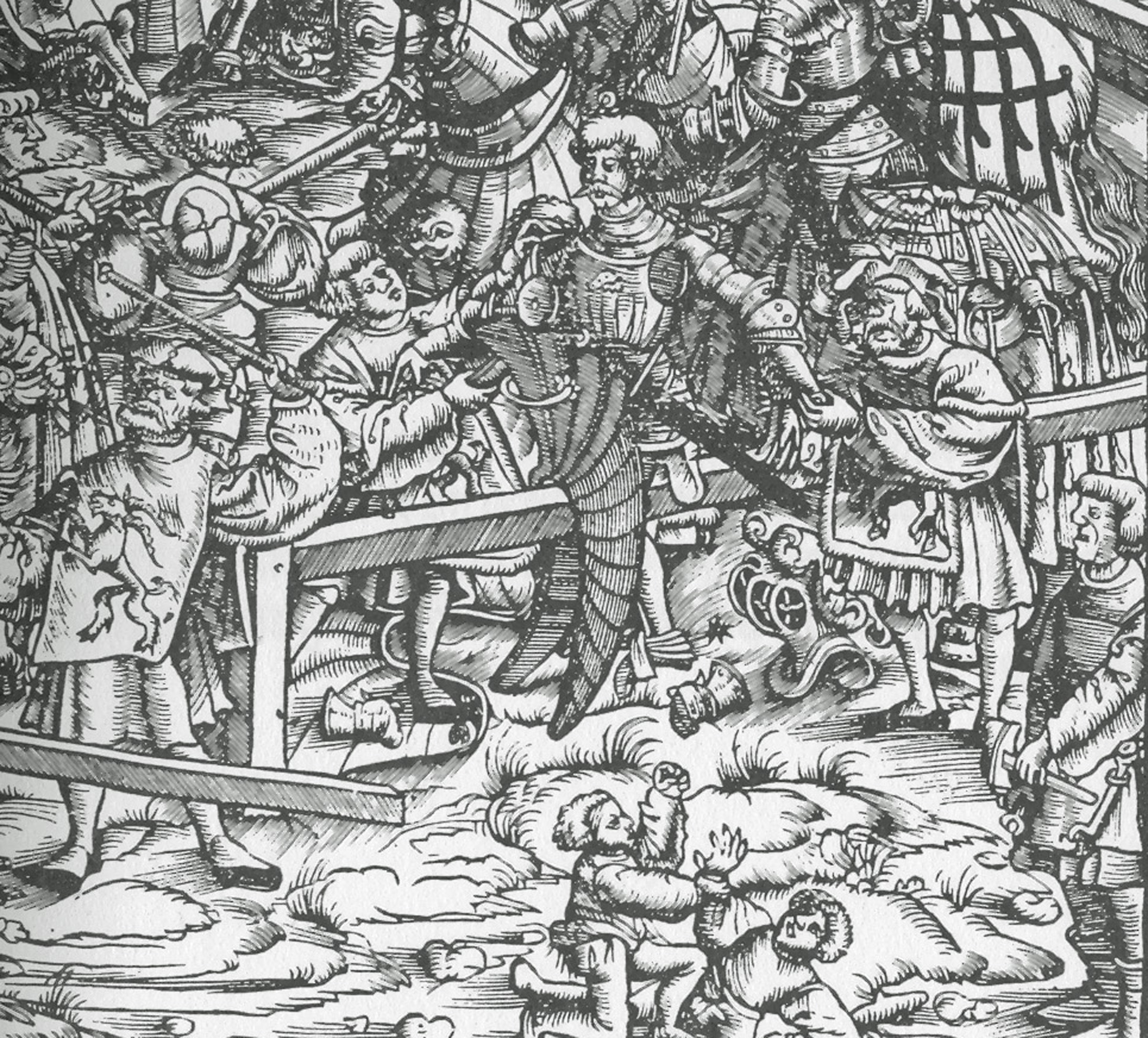
By Herzog Hans, Pfalzgraf, Graf zu Spanheim, via Wikimedia Commons*

Part 3 “The Way we Act”
When put into a situation such as game play we’re often debriefed afterwards about how the players could have acted more successfully.  Sometimes it’s simple task oriented things:
  • At the very start, take 15 minutes to discuss/agree a strategy.
  • Make sure you assign roles or a leader.
  • Periodically take a moment to review your plans & actions.

Sometimes it’s a little more complex as we look at behaviours and interactions:
  • Be aware of the team dynamics.
  • Take time to understand the personality types in the group.
  • Use a range of communications styles to bring across your point.

All of these have merit and the great value of the facilitator/coach in such team situations is that they can independently observe your actions & behaviours.  With trust the facilitator/coach can create the right degrees of tension and challenge to raise awareness and help facilitate change.

The way we can act with skill
On the demo day, you’d think that our team of seasoned professionals shared & followed the best practice that we know & love.  Well not exactly…by and large we just got stuck in!

We knew that developing a strategy for the game at the start was an appropriate thing to do but we chose to take action first and then strategise on our way.  We didn’t assign roles at all.  We reviewed our actions constantly.  We were still very successful in our tasks.

So what was going on that allowed us to apparently ignore the textbook rules?  Well I think two things:
  1. We were already familiar and practised at working in such team environments.  I wouldn’t say we were masters (read here) as such but we were able to trust our intuition (read here) and break some of the "rules".
  2. We had a number of enabling factors working in our favour (read here) which when combined with our experience created successful behaviours.

In hindsight, where I think we could have improved was in terms of a deeper strategy conversation around 20 minutes into the exercise.  This wouldn’t have changed our next actions but it may have helped relieve some of the effort we had to make towards the end of the day.

On reflection I think my message here is to pay attention to best practice.  However, if you are practiced and able to employ successful behaviours then go with your intuition.  Feel free to break some rules – it might be the only way to beat the rest!

Would love to hear your views and stories on rule-breaking!

*This 16th century image describes the punishment at tournaments for breaking the rules - the delinquent was put across the fence of the tournament area and beaten!  Nowadays, we might worry that the equivalent of this will happen to us but in reality we are only ever "punished" by our lack of skill or fear itself.

Tuesday, 29 November 2011

The one where the "Boot" was on the other foot – Part 2 "The way we think"


Last week I was invited to join a demonstration day with TrainersKitbag (@trainerskitbag) and in yesterdays blog here I talked about my reflections from the day focussing on “The Roles we Play”.  In today's blog I’d like to share my reflections regarding Intuition.

Part 2 “The way we think”
I have to say that I had only a rudimentary idea of what the demo day would involve, let alone the outcome or potential business impact.  Yet I knew the day was a great opportunity and I felt that it would be a valuable experience – I just didn’t know how.

If I had to justify the business value of the demo day to a “higher authority” my analytical, cognitive mind probably would have struggled.  However, my intuitive mind knew this was the right thing to do.  As it turned out, it was exactly the right thing to do.

Furthermore, during the demonstration day our team of 3 relied heavily on intuitive thinking with successful results.  At times, we would consciously and methodically solve a problem.  Other times we “just knew the right thing to do next” but couldn’t say why or how we knew it to be correct.  The hunch, instinct or gut reaction was evident throughout the day and in much of our problem solving activity.

The way we think we think
Ever asked yourself how you come to the decisions that you make?  The chances are that if you tried to describe it to someone you’d probably come up with a perfectly rational description of a thought process.  It might even look like a step by step process of “how to think”.

A lot of what we do in the workplace is based on an expectation that there is a rational, cognitive, analytical description of what to do.  We interview to a set of criteria… we make investment decision based on xyz parameters… we work to a set process… you get the idea.

Yet, if you spent time on this you’d probably describe some of your decision making as “if it feels right.. go ahead.”, or “if it smells a bit fishy… leave it alone.”.  How can a decision or thought feel or smell?

The reality is that these are not just colloquialisms – they describe our non-analytical judgement. They describe our instinct or intuition.

The Neuroscience opportunity
The study of neuroscience is bringing our understanding of the brain on leaps and bounds.  Much of this new understanding is relatively recent but is helping to explain how our analytical & intuitive thinking processes work.  Yet management & leadership awareness appears to be relatively low and training & development programmes have not yet caught up.

If intuition is such a part of how we function then isn't it something managers & leaders should take time to understand?

There is a huge business & social opportunity here for those who have the interest in looking at what is coming out of neuroscience.  Personally, I see furthering my understanding as part of my professional development and even adding to my professional practice.

However, I’m not a neuroscientist so I won’t try to be one.  If you are interested in the subject of Neuroscience or specifically intuition then I recommend reading this and this by Matthew Lieberman.  You might also find the NeuroLeadership Institute blog interesting.

If these are too “hefty” or you’d just like to learn in a more experiential environment then drop me a line and I’ll happily put you in touch with Neuroscientists that I’ve been working with.


In the meantime, I'd love to hear your thoughts on intuition and the opportunity Neuroscience can provide business leaders.

Monday, 28 November 2011

The one where the "Boot" was on the other foot – Part 1 "The Roles We Play"


Last week I was invited to join a demonstration day with Trainers Kitbag (@trainerskitbag).  They’re a great organisation providing a range of innovative games, events & simulations.

The day was designed to try out their “Property Trading Game” product and spend quality time with the Trainers Kitbag team and other practitioners.  Although I’ve used games with clients I have to say it’s been around 5 years since I was last in such a situation myself.  So the opportunity to learn more about how I would interact & impact with strangers in such a situation was compelling!

The game itself is very carefully and well designed - you can read more about it here and here.  It's something I'll be using with clients in the new year.

Over the next few days I’d like to share with you my reflections from the day starting with...

Part 1. “The roles we play”
In most game play, the roles that we take or respond to provide learning in terms of both our preferences as well as how we interact with others.  It’s a great way of highlighting norms, blindspots, hidden talents & limitations.  Reflecting on our actions and impacts provides rich learning.

In our team for the demo day, all 3 of us are running our own businesses, each with successful corporate careers and many years experience.  We’d never worked together and had either never met or had only recently become acquainted.  I don’t think any of us had come knowing how to play the game in any sense.  However, we were in it to win!

The way teams often work (or don’t)
So you’d expect some roles or preferences to become apparent wouldn’t you?  Some conflict or robust discussion maybe?  Perhaps a crisis out of a mistake or failure?  That drive to win must come out in some way surely?

With an existing team or with internal peer competition I’m sure this is exactly what would have transpired throughout the day.  The impact of “Joe” taking control but not attending to others perhaps.  The way decisions were handled by “Mary”.  The silence of “Pat” who was always on the periphery but unable to assert the great insight they held.

You can already get a sense of potential issues that might arise and so provide the opportunity for observation, reflection & learning.

The way teams can work
Well our team “BOOT” (yes, it’s inspired by the game Monopoly) challenged those expectations completely!
Throughout the day there was no visible hierarchy, no formal leadership roles and utter teamwork.  OK, so we took turns to hold the map!  We spoke up when we had an idea – see our work profile above!  In some tasks our preferences inevitably showed – whose wouldn’t!

Yet, there was no conflict or dominance or muted participation.  We achieved highly both as a team as well as in terms of the game itself.  Here’s how:
  • We always listened to each other, carefully and with care.
  • We were respectful of each other throughout the day.
  • We welcomed & recognised the strengths each brought to the challenges.
  • None of us tried to act as leader. We all led together.
  • We celebrated when we won.  We moved on when we lost.
  • No one was left behind.
  • We had fun!

I’d be worried about this self-assessment if it wasn’t for the fact that we were so successful and we know where we could improve!

Reinforcing the above, there were also some clear and critical team enabling factors which created the environment for these behaviours:
  • A strong desire and motivation to work together.
  • A shared team objective.
  • Similar ethics & values – although unspoken these came out in our actions.
  • Successful compatibility – through luck or perhaps synchronicity we worked well together


So looking at the "roles we play", I believe these are often the issue.  More to the point the way we choose to exercise those roles and our perceptions of others' roles.

What is critical to success is how we behave and the values that we hold.

What are your thoughts and experiences of successful teams?
What behaviours do they exhibit?
What enables them to succeed?