Showing posts with label Perspective. Show all posts

Friday, 11 May 2012

The Wondering Wanderer

By Jtneill [CC-BY-3.0 (http://creativecommons.org/licenses/by/3.0)], via Wikimedia Commons
Once upon a time a man lived in a big city. In some ways he was an ordinary bloke but he noticed things. Things others didn’t seem to notice. 

He noticed that although everyone had all that they needed, many were unhappy.

He noticed that in the big city, those who lived in the tallest parts never mixed with those in the rest of the city. Yet the whole city was governed and controlled by those in the big white palace on the hill. In his heart he felt this was wrong but he didn’t know why. 

Being a man to follow his heart, with the arrival of summer he decided to wander to far away lands to see if every town and city was the same. An ambitious endeavour but his goal was set. 

The Communal Conundrum 
The first town he came to he noticed was quite different to his own. In fact there were no buildings at all. All the people lived happily together in a group of caves but with no sign of any shops. 

Upon asking an old man about why this was, the old man said he had never heard of a shop. Everyone gathered & made what they needed each day as it came. The Wanderer commented that it seemed very sensible and all the people seemed very happy. 

The old man agreed that everyone got on together very happily but often the people were hungry. Each day the people would gather and go out together to find food. However, they all stayed together. So when they managed to find a tree with fruit, each had some but never enough to fill their bellies. 

Even though they were happy with each others company, they remained constantly hungry and the winters in the caves took their toll. Puzzled by their communal conundrum they carried on as best they could. 

The Wanderer realised just how fortunate he was because this never happened in his city. 

Snug but Hungry 
Moving on, the Wanderer came to the second town. This town was quite different being made of wood, mud and thatch and outside of each house were baskets of fruit & other foods. Approaching another old man, he remarked on how different this town was to the last.

The old man said that once upon a time they too had lived in those damp caves. However, they had realised that if each morning they discussed what they needed, the people could go out in groups to different places to gather as much as was required. Over time it had meant they could gather the materials they needed to build these nice snug homes. Winters still came harsh but the warm houses made a difference.

The Wanderer could see the sense of this.  He wished he could return to the first village and help them understand how they too could achieve this with a little foresight.

However, summer was progressing and he felt there was more to explore and understand. 

Best Laid Plans 
Journeying further, the Wanderer came to a third and final town. All seemed very similar to the second town except it was much larger. He commented on this to an old lady. 

She agreed that indeed a few years ago they had been almost exactly the same as the town he'd just visited. However, with the harsh winters and their warm, snug houses came larger families! Because of this they needed to provide more food and to store some for the hard winters. So the people had sat down and discussed how they might do this. They had no idea where to start but over a few days they managed to agree how they might attempt this feat over the coming seasons. 

In that first year, they made mistakes but because they all had a shared vision and wanted to help each other they managed to improve their fortunes.

The old lady went on to tell how the next year they sat down again and discussed how they could do this each and every year. They wanted to ensure that the children born that last winter could safely survive the coming years. Sure enough they agreed a way forward and in time the town grew and was filled with the sound of children all year round. 

He marvelled at the sense & success of this and how they had still managed to foster a happy community, unlike in his city. The Wanderer congratulated the old lady on the way she and her people had improved their town. 

Flattered by his praise, she smiled and whispered quietly, “Would you like to see something even more special?”. 

Agreeing, she led him out of the village to a small hill where the elders of the town were gathered. They were all admiring a large white square in the ground created from stone. The Wanderer asked the lady what it was. 

With great pride she said, “We’ve found a way to make our town even more successful! As we get older our houses are less comfy but we treasure the wisdom of our elders. So we are going to build them an Ivory Tower!” 

The Wanderer looked around him and wondered where it had all gone wrong… 


Background Footnote 
A funny little story, this blog was in response to a provocative conversation on Twitter started by @DougShaw1 with the following tweet : 

“Can you see into the future? Nope - neither can I. Which is why strategic planning is such a waste of time and money. Follow your heart.” 

The ensuing dialogue between Doug, Sukh Pabial, Jonathan Wilson and myself led to Doug writing “I Have A Dream” over on his blog.  This little story was a way to express the value and perils of "strategic planning" without us arguing over the commercial merits in the workplace. I hope I achieved at least some of that sentiment!

Why not join in the discussion and comment here or here?

Monday, 16 April 2012

Bigger, Better, Faster, More?

Here I am just before my son's swimming lesson and we're talking about what he wants to concentrate on today. He wants Bigger, Better, Faster, More!

I'm not a swimming teacher but I can see that all his enthusiasm and love of the water is actually having a negative impact on his swimming ability. What he wants is to swim as fast as he can and race his friend up and down the pool. Yet, the more he tries to swim quickly the less likely it is that he will actually swim fast. It's frustrating him.

We talk about what's getting in the way and how he could achieve his goal of swimming faster. Trying to go quicker ironically isn't the solution and he knows it. He's got an idea...

He gets in the pool and swims his first length slowly. I mean real slow. The kind of slow that feels agonising to watch.

Here's the thing though. Having swum a length, he sees that he's not really much slower than when he goes helter skelter. His swimming though is effortless and something clicks.

During the lesson he tries a little experiment - all his own invention. He tries swimming fast and swimming slow and he notices the feedback from his teacher. Sure enough, slow works pretty well and praise is forthcoming. Fast is when the teacher critiques.

In the car he's tells me about his little experiment. His conclusion is easily made - "I need to stop trying to go so quickly and slow down. When I slow down, I can concentrate on my technique and that's how I'll build my speed."

I could see it. His teacher could see it. Sheesh most of the pool could probably see it!

However, he needed to see it. He needed to find a different way of behaving to reach his goal. He needed to make the change himself.

What made it happen?

There was a caring conversation. There was a safe environment. There was an expert on hand to give feedback and even critique. He'd had a good day. He was enjoying learning. He was willing to experiment. The sun was shining. All these things surely helped.

Each and every one of is capable of doing similar.

Perhaps sometimes we all need to behave a little differently. Perhaps sometimes we all need to seize the moment and experiment. Perhaps sometimes we all need to let go of the Bigger, Better, Faster, More?  

Friday, 2 March 2012

FridayWondering - The Art of Business


Each Friday I'm posting a "Friday Wondering". These posts are meant to explore & discuss observations or issues which I think would benefit from discussion. Participation is open to absolutely anyone regardless of their expertise or knowledge. Just bring your curiosity!

If you'd like to discuss on Twitter rather than here then why not. It would help though if you could use the #FridayWondering hashtag. Thanks!

The Art of Business
Earlier this week I was lucky enough to join the Leap Day fun hosted in London by @dougshaw1. As well as being a great way to spend the day together, it was an opportunity to explore, discuss and practice how we might bring work and art closer together, for mutual benefit.

I came a little late to the party but experienced a wonderful hands-on tutorial on painting in watercolours from @VandyMassey . You can see more of her talent here www.vandymassey.com .

Now I've not painted anything more than a few walls and kids' Airfix models over the last 25 years. Yet, I really enjoyed trying out watercolours and even managed to paint something recognisable!

It left me wondering why, for all my years in corporate life, has art not been a part of either my own development or a medium to develop teams or capabilities. Yet there's clearly enormous potential...

So that is my #FridayWondering for this week....

Why for all the learning & development opportunities pursued in the workplace, is art not more commonplace?

Tuesday, 7 February 2012

Ironic or is it?

To celebrate International Coaching Week (ICW) I'm running a series of daily blogs on both coaching & mentoring.


Today I am delighted to host a guest post from Jon Bartlett (@ProjectLibero) a professional coach, mentor and health worker. If you haven't already, you can read more of his excellent blogging here. Here, Jon gives us a perspective on coaching in the workplace which I hope will resonate with you.


IRONIC OR IS IT?
When David first asked me if I wanted to do a blog for International Coaching Week I had just agreed to carry out some mediation training. It seemed slightly ironic that during the one week that is dedicated to coaching I would be doing mediation. However, as I thought about it made a lot of sense, let me explain.

For those of you who are unaware how a basic mediation works, let me do a (reasonably) quick explanation – basically you get the two protagonists in a room without all the attendant hangers on, be it HR staff, union reps or their best pal. You sit down individually with each of them, work out what is important and send them away to have a think about what they want to say to the other person. Then when they’ve decided you work with them to craft a form of words which honour their intent whilst also not starting a small office war. That takes up the morning, then after lunch you bring the two parties together. They both get an uninterrupted speaking time and it goes from there with the mediator(s) helping the flow of discussion, reframing some of the content, enabling them to see the others position. With any luck an agreement can be reached which enables them to continue to work together and saves on tribunals, oceans of paperwork and their pent up emotions ruining work for everyone else.

Now as a coach I often work with clients who are in conflict with someone else, and they want to examine how they perceive this person and how in turn they are viewed. So, transferable skill to mediation right there. I also work with clients who can only see one way forward in a situation and need to reframe their position, another transferable skill. I’m sure you can see where I’m going with this but lets add another, deeper layer.

What about the clients who are in conflict with themselves, the ones who sabotage their own best efforts, or think the world is against them and that they have no control over anything? Well a surprising amount of people who are hugely aggressive during a mediation are in fact acting out of very positive intentions. They may have become the office “problem” because it was the only way they knew how to express themselves and they often feel powerless against the system / their manager / their team. Given a voice and the chance to build a rapport with the other person they become like pussycats. Well it’s the same with coaching clients. They don’t know how to talk to themselves, how to break free of years of poor programming, how to take charge of their own lives. They have basically fallen out of rapport with themselves and the skill of the coach is sometimes in highlighting that fact and starting the conversation anew.

So it’s appropriate that I’m mediating this week because actually, I’m just coaching in a different way. One of the many methods available to a coach and I’m sure you will hear more about other coaching perspectives during David’s great series.

Thursday, 26 January 2012

Warnocking & Leadership

Even if you don’t work in the HR space, you know that feedback is important. It’s how we learn & develop. If it’s well delivered, feedback is engaging. It’s a gift.

Warnock’s Dilemma 
Those of you who blog may be familiar with the phenomenon that is called Warnock’s Dilemma. If you are not then there is a good description on Wikipedia here and even a dedicated website here. 

The problem it describes comes from a lack of response to a posting. Any blogger will be familiar with posts that don’t attract comments – sometimes it can be quite discomforting. Warnock’s Dilemma explains this lack of feedback as being for 1 of 5 different reasons: 
  1. The post is correct, well-written information that needs no follow-up commentary. There's nothing more to say except "Yeah, what he said." 
  2. The post is complete and utter nonsense, and no one wants to waste the energy or bandwidth to even point this out. 
  3. No one read the post, for whatever reason. 
  4. No one understood the post, but won't ask for clarification, for whatever reason. 
  5. No one cares about the post, for whatever reason. 
Whether you blog or not, it all makes perfect sense doesn’t it… so what? 

Well, have a think about the 5 different reasons and replace the word “post” with “Executive Communication”. It’s a slightly different perspective isn’t it... More than that, I think it perhaps illuminates some broader issues. 

Leaders hide their discomfort 
We know that dealing with ambiguity is part of the leadership role, along with the need for strong communication skills. 

Often this means we develop leaders who are able to function without much feedback and are able to communicate strongly, sometimes perhaps in a way that even stifles feedback. I suspect that the combination conspires against leaders receiving the feedback they need, as humans. 

To not get the feedback you need as a human. That would feel discomforting wouldn’t it? Shouldn’t it? More than that, doesn’t that lack of feedback limit learning and development? 

Organisations that recognise this develop leaders to have strong reciprocal communications skills and can both give & elicit feedback effectively.

Take a look around your organisation. I’d guess there may be leaders you can see who don’t function at this level.  Are they learning & developing as they need to? Are they hiding their discomfort? 

Warnock’s Dilemma is incomplete 
Warnock’s Dilemma is great but it’s important to recognise its origins are in the online world of forum posting 10 years ago. I believe there are 4 other reasons people don’t contribute to postings & blogs which we already understand from the corporate world. 
  • The post is good/bad but the writer is weak at eliciting feedback. 
  • The post is good/bad but the readers’ feedback skills are weak. 
  • The post is good/bad but the reader has no time to comment. 
  • The post is good/bad but the reader does not care enough about you to “gift” you their feedback. 
I think these are accurate additions but test them. Replace the word “post” with “Executive Communication” or something else that you find relevant. 

What do you think? What else would you add to Warnock’s Dilemma? 


Self-Leadership Postcript 
If we are interested in feedback and dialogue on ourselves then I believe it helps to be aware of the various reasons why others may not comment. The issue could be us; it could be others; it could just be circumstantial.  If we feel discomfort or are not getting the feedback we need then the only positive remedy is to solicit feedback from people whose opinion we care about. 

If we read the work of others who actively or passively seek feedback & comments, what stops us from doing so? Feedback is a gift. If you are time poor then why not find quick ways to share your sentiments? If you disagree why not tell the author?   If you don’t care then why are you reading their work – really think about why.

As leaders or advocates of feedback we know the value of walking the talk.  How much walking the talk do you need to demonstrate in the world of social media?

It’s a personal decision but perhaps this really is the dilemma that comes from Warnock....

Monday, 19 December 2011

A Calendar of Blogs

Who’s on your blog radar?
There are lots of good blogs out there aren’t there.  At various times of the year various listings or rankings of top bloggers hits the timeline providing great endorsement and signposting to some wonderful reading and discussion.

But what about all the other bloggers?  You know, the ones who blog religiously but perhaps don’t get the notoriety that others do.  The ones who don’t blog each week or even those who have taken a blogging break.  They maybe haven’t hit people’s blog radars yet…
A Calendar of Blogs
Well let’s change that a little bit.  I’d like to share with you some of the fantastic people I’ve come across this year who may not be on your blog radar.  Some of them I’ve known a while; others I only connected with a few weeks ago.  However, I appreciate what they have to say and if you don’t know them already, I think you might too.

I’ve selected one for each month of the year because each is different and bloggers are not just for Christmas!  There are others but hopefully you might add them here yourself…

Who would you like to recognise that might not be on most people’s blog radars?
Please feel free to create your own list in the comments below.  The only criteria is your appreciation and the fact that they may not be on peoples radars!


My Calendar of Blogs
Thanks for such great dialogue, sharing, engagement and writing.  I hope you have a wonderful 2012!

Emily Stone (@Em_Stone) http://wellconnect.co.uk/blog/
Emma (@Onatrainagain) http://www.myblogmyrules.co.uk/
Huw Sayer (@huwsayer) http://huwsayer.wordpress.com/
Ian Perry (@Ianperryemerge) http://emergecoaching.typepad.com
Ian Pettigrew (@KingfisherCoach) http://www.kingfishercoaching.com/
Jan Bowen-Nielsen (@janbowennielsen) http://www.quivermanagement.com/blog/
Jon Bartlett (@Projectlibero) http://projectlibero.wordpress.com/
Martin Couzins (@martincouzins) http://itsdevelopmental.com/
Natasha Stallard (@StirTheSource) http://stirringthesource.com/
Sam Lizars (@SamLizars) http://www-theinsider.blogspot.com/
Vera Woodhead (@verawoodhead) http://verawoodhead.wordpress.com/
Zoe Mounsey (@zoemounsey) http://ideasandscribbles.wordpress.com/

Thursday, 1 December 2011

The one where the "Boot" was on the other foot – Part 3 "The Way we Act"


Last week I was invited to join a demonstration day with TrainersKitbag (@trainerskitbag) and in yesterdays blog here I talked about my reflections from the day focussing on “The Way we Think”.  In today’s blog I’d like to share my reflections on how we act.
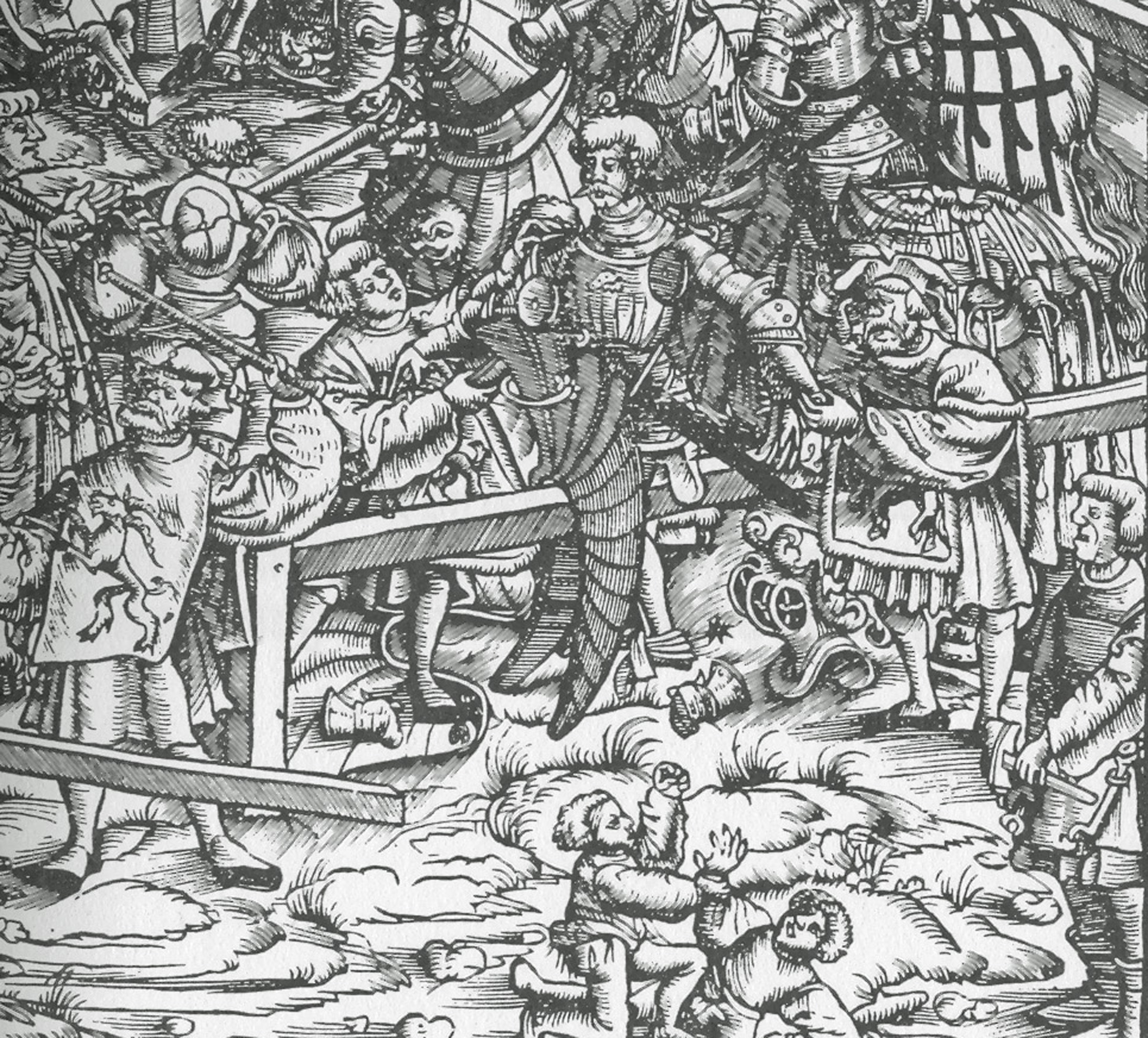
By Herzog Hans, Pfalzgraf, Graf zu Spanheim, via Wikimedia Commons*

Part 3 “The Way we Act”
When put into a situation such as game play we’re often debriefed afterwards about how the players could have acted more successfully.  Sometimes it’s simple task oriented things:
  • At the very start, take 15 minutes to discuss/agree a strategy.
  • Make sure you assign roles or a leader.
  • Periodically take a moment to review your plans & actions.

Sometimes it’s a little more complex as we look at behaviours and interactions:
  • Be aware of the team dynamics.
  • Take time to understand the personality types in the group.
  • Use a range of communications styles to bring across your point.

All of these have merit and the great value of the facilitator/coach in such team situations is that they can independently observe your actions & behaviours.  With trust the facilitator/coach can create the right degrees of tension and challenge to raise awareness and help facilitate change.

The way we can act with skill
On the demo day, you’d think that our team of seasoned professionals shared & followed the best practice that we know & love.  Well not exactly…by and large we just got stuck in!

We knew that developing a strategy for the game at the start was an appropriate thing to do but we chose to take action first and then strategise on our way.  We didn’t assign roles at all.  We reviewed our actions constantly.  We were still very successful in our tasks.

So what was going on that allowed us to apparently ignore the textbook rules?  Well I think two things:
  1. We were already familiar and practised at working in such team environments.  I wouldn’t say we were masters (read here) as such but we were able to trust our intuition (read here) and break some of the "rules".
  2. We had a number of enabling factors working in our favour (read here) which when combined with our experience created successful behaviours.

In hindsight, where I think we could have improved was in terms of a deeper strategy conversation around 20 minutes into the exercise.  This wouldn’t have changed our next actions but it may have helped relieve some of the effort we had to make towards the end of the day.

On reflection I think my message here is to pay attention to best practice.  However, if you are practiced and able to employ successful behaviours then go with your intuition.  Feel free to break some rules – it might be the only way to beat the rest!

Would love to hear your views and stories on rule-breaking!

*This 16th century image describes the punishment at tournaments for breaking the rules - the delinquent was put across the fence of the tournament area and beaten!  Nowadays, we might worry that the equivalent of this will happen to us but in reality we are only ever "punished" by our lack of skill or fear itself.

Wednesday, 13 July 2011

Worlds Apart


Having put it off for some time, last weekend we finally succumbed to the attraction that is Disneyland Paris.

I have to confess that I can’t really be doing with large crowds and lengthy queues... life’s too short and they always seem to bring out the worst in humanity. However, it was the right time for the kids and a break in France was attractive.

Of course, we had a fantastic & exhausting time but this is not a review of Disneyland Paris. What I’d like to share are some reflections from the journey about the different “worlds” we inhabit...

Walts World
Walt & Mickey are clearly the kings immemorial of Disney. In the park, Walt stands proudly on a pedestal welcoming visitors telling us this is his kingdom, his creation. Alongside him and throughout the park appears Mickey. In fact, I’d even go as far as to say that Mickey wears the crown in Walts World.

Yet they play very little active parts in the rides and amusements. They are more like a standard or a symbol of what you can expect to experience. A standard and ethic that is visible everywhere saying loud and proud “This is who we are and this is what you can expect from us!”. You may not get a sense of the Disney organisation but you do get what you came for.

In Walts World they are the Masters of Delivery, providing pleasure on tap at a price.

Walloon World
Belgians are mad. Not my viewpoint but those of two lovely Belgian journalists we had dinner with en route at this fab hotel. Apparently, their Royal Family with the exception of the King are an embarrassment. There is no decision making government in place. The country is irreconcilably divided along French (Walloon) and Dutch (Flemish) lines in a perpetual stalemate.

Does all of this matter? Not really. The country ticks along fine. The journalists have something to write about. Tourists still come for the architecture, beer, chocolate & diamonds. The European Union makes them significant. Nothing is likely to change anytime soon.

In Walloon World they live happily, knowing that they are broken but unable to change.

Wantwit World
In the UK we like to think that we are considerate and fair. Yet regardless of nationality, when faced with the prospect of photographing their kids with Mr Incredible some parents turn into right Wantwits.

With no queue or ticket, they give themselves permission to thrust their kids to the front. It’s OK to trample others to pursue your own cause. A photo with a faceless actor, who is wearing a costume of a character from a cartoon, is more important than showing your child how to behave.

In Wantwit World only the selfish survive living off momentary & meaningless gratification.

Wonder World
OK, here’s the confession... There were rides that the kids wanted to do that both us parents were scared to do. On some occasions the height limits saved us, on others the 100 minute queue dissuaded everyone. However, you can’t always run away!

Together we tried different rides and attractions, learning what was fun and how little was in fact scary. We stretched ourselves and learnt together – you can read more of my thinking on this here. We trusted our sense of adventure and were not disappointed. We found wonder in our shared experiences.

In Wonder World unforgettable trust reigns. New experiences & difficult journeys are shared. Fears are overcome.

*Image by Wysinger at en.wikipedia [Public domain], from Wikimedia Commons