Thursday, 21 June 2012

Watching over us

The phone rings and my wife dashes to answer it. I overhear her talking to someone I know is familiar to her but it’s not a friend or relative. I hear her saying “thank you” as the tears and crying come. As I rush to find her in the kitchen she finishes the call and breaks down. 

Monica was her mother and she died peacefully in her sleep on the morning of 21st June last year. She was an amazing woman. Not only for the love she gave but also for all the hardship and pain that she had endured from an early age. You never knew everything about her or her upbringing but she gave you glimpses of her life now and then. 

Perhaps that’s the role of a parent… to share enough to guide your children but not everything. Besides, what mattered more than anything else, for all of us, was the grandmother she could be to our children. 

The joy our children and “Granny Mana” brought to each other was clear. On a gloomy day they would lift her spirits and spontaneously share their unconditional love with her. Every single time. Similarly, no matter how bad a day she was having she would also give her love to them without condition. 

She was such a part of our family that it felt that we were a unit of five - Granny, Mum, Dad and the two boys. Basil the dog was also a huge fan of Granny and would often sit close to her, protectively, but always being careful not to sit on her toes! 

It’s been a year and now there are four of us. The huge gap left with her passing seems to have been filled with the sense of her presence with us in so many places. Fond memories but also a sense of her still watching over our family and being the grandmother she could be. 

The next clear night we get, we’ll look up at the sky with the boys and find her star, as we do with Grandad and thank them for keeping watch over all of us.

As with all things the above only relates one persons story - my story.  Here is another more personal story.  A "letter" from my wife Paula to her Mum written to accompany this post...

To my Mum
It is one year today since you died peacefully in your sleep. You got the end you deserved Mum and I am thankful for that.

I think of what you would be doing were you still here... You would have enjoyed watching Euro 2012, maybe not the Irish matches, although you would certainly have appreciated the fans singing. I miss seeing your happiness at spending time with us and particularly with your two special grandsons. 

I love you and that has never been in any doubt but I have constantly struggled to come to terms with your mental illness. I have felt anger that my mum was taken away from me when I was seven and replaced her by a mother who struggled to retain her identity throughout frequent bouts of illness. 

I will always carry a child’s feelings of guilt that my love for you could not save you or make you better. There were far too many goodbyes at the end of numerous visits to psychiatric wards and hospitals, hurrying to get back to ‘normality’, away from the chain-smoking patients sitting in their drug induced torpor or from those that were more worryingly clearly agitated and disturbed. 

As a child, witnessing people battle with mental illness was an overwhelming, confusing and frightening experience. Although you were struggling with your own illness you tried to protect us from that as best you could.

However, far worse than our fear of others ‘insanity’ was our conflicting guilt at leaving you there and the relief that we didn’t have to cope with you at home. As I got older I could sense your fear and sadness at those partings, although you always did your best to try and hide it from us. As a mother myself I feel such pride and admiration that throughout it all you still tried so hard to be a loving, caring and supportive mum. 

So now you’re gone. I don’t have to worry anymore whether you are taking your tablets, or to try and convince you to go to bed after days with out sleep, during one of your more manic phases. I won’t quietly sit with you anymore listening to music, your place of refuge from the world of delusion and paranoia that you often inhabited. 

You always had that keen Irish wit and appreciation of a good laugh. Many a misdemeanour could be forgiven for someone with a sense of humour. I miss your ability to laugh at life, even though you walked a harder path than many of us. 

So Mum, although there were times over the years that I wished an end to it because it was just too hard, I wish with all my heart that at this moment we could be sitting together listening to music and sharing a laugh. 

All my love always 
Paula x

Friday, 15 June 2012

Something Special

If you look to the right of your screen you'll see what you've done for the past 500 or so days... found it?
That's it... you've read this blog over 10,000 times! You probably didn't realise but in doing so you've done something quite special for me. This 80th blog post explains... 

Your reading
I write my blogs "in the moment". Sure there's sometimes a bit of rework and sometimes I delete a draft. However, I write when I feel the energy for a subject. There's not a stack of drafts cooking slowly in the background or a schedule of pre-written blogs. What you read is me, now, right or wrong.

So when you read my post you are listening to me right here right now. I really appreciate you taking that time to listen to my thoughts, ramblings & opinions. It's something special to me. Thank you.

Your Comments
I write my blogs to stimulate discussion and debate around the subjects posted. What we do thereafter is up to us. So when you share your perspectives and comment, you make the blog successful. Particularly so when we have the good debate!

What I didn't expect a year or so ago is that our dialogue on these posts would move away from the "comments box" and onto Twitter and the real world. I think it's wonderful and something special! Thank you.

Your Feedback
I still feel I have a lot to learn about blogging. I don't mean about how to manage a blog although I think that's constantly evolving. I feel I have a lot to still learn about myself blogging - in particular my writing, my thinking, my areas of interest, even my motivation. I believe blogging is supposed to be that way. There's meant to be a slight and constant tension.

Publicly and behind the scenes, lots of you have shared with me your feedback on how I blog. The support it provides is amazing. That feedback is such a gift. It's something special to me. Thank you.

Your Contributions
Many of my blogs have started from a conversation elsewhere. Whether you know it or not, you have quite probably contributed in some way to a blog post here!

However, the blog was always meant to be a vehicle for others to contribute so I'm delighted when someone posts a guest blog here. It provides such different perspectives and even better writing!

I've had some very special contributions from Guest Bloggers so here's your own very special Blog Roll. Thank you!

"Working With People" by an anonymous HR professional
"Ironic or is it?" by Jon Bartlett (@Projectlibero)
"The Coaching Journey" by Karen Locking (@karenlocking)
"Mapping the Mind" by Bev Holden (@stickythinker)

The Future
The blog and it's readership has grown & developed beautifully. So to a large extent I'd be very happy if the future brought more of the same. However, there are a few areas of development that you can expect...

Personally, I think my earlier posts didn't hold enough challenge. So over time I've been more deliberate about creating greater tension & challenge - expect more of this! A big thanks goes to Natasha Stallard (@StirTheSource) for helping me express this (#mindtheedge).

I've not been particularly deliberate about blog subjects, always writing where I found the energy. So the tags to the right of your screen quite pleasingly reflect much of what I do and want to write about. Ironically, the most frequent topics include Coaching, Leadership, Learning and even Social Media but not Change... We all have blind spots sometimes but expect a few more blogs on Change in the future!

The Guest Blogs have been rewarding in different ways but always bring in perspective or experiences that I don't have. I love it and want to encourage more people to guest blog here - regardless of experience. If this interests you, no matter how unsure you are, then just reach out to me publicly or privately.

Thanks for reading & helping make this blog successful.  I hope you continue to enjoy it!

Wednesday, 13 June 2012

At risk of being coached?

I met someone earlier this week and we were talking about coaching. The conversation turned towards how some practitioners take a very purist stance towards coaching and how others don’t. 

In this instance, a purist stance would be what is often termed “non-directive”. That is to say that the coaches role is purely to ask open questions without directing the client, using the clients own language... The main principle is that the coach does not in any way provide advice or direct the clients actions. 

To be pedantic there is no such thing as “non-directive” in any human interaction but that’s another blog! 


Whose Risk? 

I’m not knocking the spirit or the practice of “non-directive” coaching. However, this isn’t always what a client wants. In an organisational setting it’s not always what a client needs. So who decides? 

Take for example a manager who is having trouble performance managing members of staff. The purpose of the coaching & the contracting with the coach is focussed on improving the managers ability to deal with performance situations. 

In the coaching conversation, the manager decides to take a course of action that to an informed outsider would clearly put them & their organisation at risk – say unfair dismissal. 

If the “non-directive” coach, identified the risk how could they intervene and remain “non-directive”? It’s a perfectly reasonable & professional practice in any form of coaching (or mentoring) to seek permission to “take off the coaching hat” to offer thoughts or reactions. However, for a purist coach to do this in some way would seem to undermine the whole purpose of being “non-directive”. 

Here’s another perhaps more important issue. What would happen if the “non-directive” coach didn’t appreciate the risk being taken. After all this is not what they were employed to do. Could they become complicit with reinforcing the clients’ agenda and decision to take a detrimental course of action? 

Who decides what a clients wants and what a client needs? Whose risk is it? 


The ill advised need sound advice 

Coaching is not about giving advice. However, it is about care for our clients. 

Fundamentally, no amount of “non-directive” coaching will help the ill advised follow a safer course of action. In fact, the above example shows that “non-directive” coaching may even enforce their stance. 

In any other walk of life, it’s hard to imagine a paid professional sitting across from their client and letting them pursue a course of action that would put them at peril without raising their own concerns. 

Perhaps this is why organisations tend to “buy” coaches with industry & leadership experience rather than purely coaching qualifications. 


Does purist coaching make sense in organisations? 

I can’t say never, but I have a long standing concern...

Even though we always strive to help our client determine their own agenda and actions, coaching is a human interaction. Human interactions require us to give of each other and see each other - @Projectlibero puts this very eloquently here.

In organisations, we are working in systems where potential risks and consequences of our actions can be amplified. If we don’t share our care and concerns do we potentially put our clients at risk? 

What do you think?

Wednesday, 6 June 2012

Always there...

I can't imagine losing either of my children. It's perhaps a deep seated fear in all of us but it's something I just can't contemplate. Whether you have children or not I'm sure you know what I mean.

My children have been poorly - we nearly lost our youngest in childbirth - but there have always been medical professionals & emergency services on hand to help. I know we are privileged in the western world but it's easy to take such things for granted isn't it.

I don't remember exactly when I "met" @RobertWeeks on Twitter. I do remember when I read about the sudden death of his daughter Sophia, at just 11 weeks old. I can't imagine his family's heartbreak but reading about Sophia and what Robert shares on Twitter has moved me deeply.

The only thing I can do to help is support Robert and his family's fundraising.

Walking the Three Peaks
A few months ago my good friend Matt suggested we walk Yorkshire's Three Peaks together before he & his family emigrates to the USA. We'll stay in touch across the Atlantic but it's possibly the last opportunity we'll have to do anything like this together in the UK.

A few weeks ago, I asked Robert if he'd mind if I tried to help his fundraising efforts whilst doing the Three Peaks walk. Possibly a strange request from someone he only knows through Twitter but bless him he came straight back with his full support.

Inspired by little Archies Walk, it felt right to help support Robert's fundraising for Great Western Air Ambulance @GWAAC. I don't need to tell you how important Air Ambulances are for providing urgent help - it just amazing how such critical charities are entirely funded by private donations.

You Can Help
Whether this is the first time you've visited the blog or you're a regular reader; whether you know me personally, through Twitter or not at all; you can help too. 

Firstly, thank for you for reading this far. I hope you've been able to take the time to read about Robert and his family's fundraising and Archies Walk.

Now for the price of a cup of tea or more if you'd prefer, I'd love it if you could help me raise money for @GWAAC. Just click here...


Thank you.

Thursday, 31 May 2012

Vote for me?

It’s great to be nominated for an award. In itself it’s often a great achievement, let alone actually winning one. Once nominated though, it’s often the case that people like you & me get a chance to vote for that winner. 

All fair enough but what if you’ve never seen a nominees work or performance? 

Could you vote for a stranger? 
I was recently approached on Twitter by someone I vaguely know. They are a coach and I have no reason to believe that they don’t work to the set of coaching ethics that I do. We’ve met once, briefly at a conference in a group exercise. We follow each other on Twitter but we’ve not connected elsewhere and have never picked up the phone to each other. 

They wanted me to vote for them for a coaching award they had been nominated for & to retweet the fact that they’ve been nominated. 

I could have ignored their direct request to me but that didn’t feel like the right thing to do. I have respect for them based on what I know of them and that respect encouraged me to respond with my dilemma...  I explained my feelings and asked them on what basis do I vote for them in particular over the other candidates? 

My gut feel for the situation was rewarded with the sense of having done the right thing and with a prompt and reasonable reply. Their suggestion was that I could look at all the nominees videos and decide based on what I feel is in line with my values and integrity. A fair & respectful response I think. 

That feeling of being Chugged... 
I’ll do nothing about the voting – the videos say what you’d expect the nominees to say. Perhaps more importantly, in my heart I feel that you can only genuinely vote for someone when you have an appreciation of their abilities & how they perform. 

But here’s the thing. The experience felt a bit like when you are approached by a “Chugger” on the street. They may be nice people. Their cause may be worthy. But their manner of approach and apparent motivation feels wrong... 

Unfortunately, this experience has made me question this persons judgement. I’m wondering if really they are just trying to win the nomination not on merit but by mobilising their Twitter followers to vote for them. I wonder if this approach risks making the award a hollow popularity contest...

Do I know you well enough? 
So I look at Twitter and the people I follow and wonder who do I know well enough to vote for them if they were nominated for an award in their area of expertise. There’s plenty of folk I like, respect & want to support but sometimes that isn’t enough. I have great friends on Twitter who I trust but I’ve rarely seen them at work. 

So I look at myself on Twitter and wonder who knows my work well enough to vote for me in the work that I do? Of my 900 followers who would I genuinely approach? 

I’m not chasing awards but the answer makes me realise that what I’m doing on Twitter is not enough. For all the great learning, sharing, support, debate and friendships I have thanks to Twitter there’s very few people in a position to endorse my work in this way. That’s something I’m going to change. 

In the meantime, I have a couple of questions for you... 

How would you have responded to the ethical situation I described above? I’d like to learn from others' perspectives on this example.

Looking at your Twitter interactions, do you also find few people know your work well enough to vote for you? Perhaps I’m in the minority!

Thursday, 24 May 2012

Beecroft – Who is Under Performing?

OK there’s a lot being written about the Beecroft Report at the moment and I’ve hesitated to write anything at all. However, there’s an important aspect to this story which just doesn’t seem to be coming out loudly. Who is underperforming? 

Current perspective 
The Telegraph’s story yesterday included a headline saying : 

“The majority of employers back controversial proposals to allow “no-fault dismissals” for under-performing workers, a survey has revealed.” 

The story then reveals it’s not the majority of employers – it’s the 1,100 respondents to an IoD survey where 76% backed the proposals. The director-general of the Institute of Directors, Simon Walker, is quoted as saying : 

“Our members prefer Beecroft’s ideas on unfair dismissal to the watered-down model being promoted as an alternative, so the Government should not waver”. “Beecroft’s changes to dismissal procedures would reduce regulatory burdens and encourage businesses to recruit more people — anything less would have a considerably weaker effect.” 

I’m not going to assume what the UK business community do or don’t feel about the Beecroft report. Plenty of others are already doing this. However, the positioning of the promoted benefit to business overlooks a fundamental part of good business. 

This is not really about business growth is it?
If you are planning to grow your company through recruiting more people then your focus is on growth not the regulatory burdens of removing staff at some theoretical point in the future when they have failed to perform. So “the story” here to a large extent doesn’t really deal with the dynamics of successful businesses enjoying growth. 

The issue is then more one of how you can replace under-performing staff in businesses regardless of their economic success. The process of staff replacement may on occasion be business enhancing… it could involve recruitment… but the net effect is not necessarily greater employment or business growth, in the short term or possibly ever. 

Are the headline grabbing stories persuading us to think of the Beecroft report as a way to business growth? Possibly… regardless, this not about business growth in successful businesses is it? 

This is about underperformance. By whom? 
There are a multitude of reasons why staff may under perform. However, if you can’t deal effectively with someone who is underperforming with current legislation etc. then what does it actually say about you as a business or as a manager? 

In my experience, it’s those who can thrive through adversity who are successful. 

If you can’t effectively deal with under-performance in your business today, then can you actually nurture great performance through people at all? 

Could revised legislative changes help perpetuate underperformance of managers who are not able address performance through developmental conversations? 

The Irony of Beecroft
Have you seen the reported explanation from Adrian Beecroft of what/who influenced his thinking… 

“It is actually a human resources director whom Mr Beecroft was once forced to dismiss, an experience that made the venture capitalist determined to reform the system. “We had an HR man who was very good at the technical stuff, but hopeless with people so we dismissed him, having thought we’d gone through the process,” Mr Beecroft explains. The company then placed an advert for a replacement who was “good with people”. “And he sued us for discrimination on the grounds that everybody knows that people who are good with people means we want a woman. We went to the lawyers and said this is ridiculous and they said we’d have to pay and so we paid him.” The £150,000 payoff that Mr Beecroft’s firm had to make to the under-performing employee was, he says, a typical experience for entrepreneurs and small business owners. Many people simply do not bother to hire because of the problems it can cause, he claims.” 

What is not said by Mr Beecroft is how his firm managed:
  • the hiring decision/process. 
  • the performance management process. 

Then what is said but won’t be addressed by his recommendations… 
  • the bone of contention being an issue of discrimination.

It’s easy to read this and think red-tape & legislation led to an extortionate payout of £150k… the reality is that perceived or actual discrimination led them to settle out of court as the lawyers must have perceived there was a risk of being found wanting in a tribunal. 

Ironic isn't it? What does this say about his firms ability to lead and manage people let alone manage their performance?


Recommended Further Blog Reading 

Tuesday, 22 May 2012

Communities Take Action

I’m just returning from latest Coaching & Mentoring “research day” run by Sheffield Hallam Business School (SHU). For those of you who don’t know, the round trip to Sheffield from my home in Norfolk is over 7 hours by train. Not something I undertake lightly but these “research days” are worth every minute!

The train journeys also give me time to work & blog... 

The value of the Unconference format 
Run with an OpenSpace format by the Coaching & Mentoring faculty at SHU these “research days” might also be described as quarterly unconferences.

I’m a big fan of the unconference format but I believe there’s always a risk that they won’t produce any tangible community action. There may be lots of great individual learning, connecting and discussion but leading to what? 

Assuaging my unconference fears was last months’ first #LDConnect Unconference (#ldcu). This has generated some great thinking which has continued and developed after the event and is in my opinion building towards real action. 

Today’s “research day” went one further. 

Community Action 
In one session, a very lively group of us explored the dynamics around Coach Supervision and the expanding number of coaches becoming Coach Supervisors. 

On the one hand there was appreciation for the role of Supervision as part of our development & professional practice. On the other hand, the rapid growth of income generating Supervision with a focus on coaches and not mentors felt like a big warning signal. 

After some great discussion a vision for the future was loosely developed. I won’t go into too much detail here & now as it’s going to be developed into a co-created article for the Industry magazine “Coaching at Work”... 

A positioning paper from a group of professional coaches/mentors & academics to challenge the status quo. To share our collective thinking on how the industry could adopt a more suitable approach to developing professional practice. 

Now that is what I call action! 

Simply Special
Was this group special? Yes and no...

We developed this thinking collectively around an area of common interest. We saw something wasn’t quite right but we were keen to develop our understanding through open dialogue. We came to a joint conclusion on what could be done to constructively (not destructively) create a better future. We decided to take action - collectively. 

It was that simple and for that it is also a bit special. 

What you going to do?
I know we’ve not completed our journey yet. We’ve not yet shifted the thinking of the industry let alone the professional bodies. But we’re going to try in a constructive & collaborative manner. 

We could all do similar - something simple, something special.

So why don’t we just do it?

Monday, 21 May 2012

You did it! Right?

Great weekend?  Fabulous!  Last week was busy wasn't it & I'm sure this week will be too.

You read Friday's post here didn't you?  Great!

So you had that phone call... You emailed some folk to arrange to talk... You committed those fantastic plans to paper and shared them... Yes?  Great!  How did it feel?

Oh I'm sorry...  You didn't have time?  You didn't read the post?  Nothing happened last week worth sharing?  Really?

You're better than that I'm sure.  Have another think...

What made last week stand out?  What can you take from last week and do something with this week?  Who are you going to tell about it?

Before the tide of this week washes you into Friday, find the energy to do something with whatever last week washed up on the beach. If it's elusive and you can't find it, reach out and ask for the help of a friend to do a bit of beachcoming.

If you're not quite ready yet then watch this video and find your story for tomorrow.

Thanks to @KingfisherCoach & @Brainpicker for sharing this video.

Friday, 18 May 2012

Will it go 'round in circles?

It's the end of the week and we've all been very busy.

Lots of talking. Lots of thinking. Lots of inspiration.

It's OK.  It's Friday and the weekend is coming to rest our weary minds.

But there's the problem... as a salve the weekend can't help but take away some of the energy you have built this week. If you're not careful those great ideas will stumble...  Will it go 'round in circles?

Maybe that's as it should be.  Or maybe you want to turn those plans into something more than just talk, thoughts & dreams.  Maybe you've got a song but perhaps you haven't got a melody yet.

Do yourself a favour...

Pick up the phone and tell someone your dream.  Email some folk and arrange to talk about how to turn that dream into a plan.  Write a blog about what you are committing to do and invite people to join you.

Take some inspiration from @RafaDavies  and read what he's doing here.

Listen & watch this group of people come together and do something.  Feel the energy.  Then do something!

If you don't will it go 'round in circles? Have a great weekend!


Friday, 11 May 2012

The Wondering Wanderer

By Jtneill [CC-BY-3.0 (http://creativecommons.org/licenses/by/3.0)], via Wikimedia Commons
Once upon a time a man lived in a big city. In some ways he was an ordinary bloke but he noticed things. Things others didn’t seem to notice. 

He noticed that although everyone had all that they needed, many were unhappy.

He noticed that in the big city, those who lived in the tallest parts never mixed with those in the rest of the city. Yet the whole city was governed and controlled by those in the big white palace on the hill. In his heart he felt this was wrong but he didn’t know why. 

Being a man to follow his heart, with the arrival of summer he decided to wander to far away lands to see if every town and city was the same. An ambitious endeavour but his goal was set. 

The Communal Conundrum 
The first town he came to he noticed was quite different to his own. In fact there were no buildings at all. All the people lived happily together in a group of caves but with no sign of any shops. 

Upon asking an old man about why this was, the old man said he had never heard of a shop. Everyone gathered & made what they needed each day as it came. The Wanderer commented that it seemed very sensible and all the people seemed very happy. 

The old man agreed that everyone got on together very happily but often the people were hungry. Each day the people would gather and go out together to find food. However, they all stayed together. So when they managed to find a tree with fruit, each had some but never enough to fill their bellies. 

Even though they were happy with each others company, they remained constantly hungry and the winters in the caves took their toll. Puzzled by their communal conundrum they carried on as best they could. 

The Wanderer realised just how fortunate he was because this never happened in his city. 

Snug but Hungry 
Moving on, the Wanderer came to the second town. This town was quite different being made of wood, mud and thatch and outside of each house were baskets of fruit & other foods. Approaching another old man, he remarked on how different this town was to the last.

The old man said that once upon a time they too had lived in those damp caves. However, they had realised that if each morning they discussed what they needed, the people could go out in groups to different places to gather as much as was required. Over time it had meant they could gather the materials they needed to build these nice snug homes. Winters still came harsh but the warm houses made a difference.

The Wanderer could see the sense of this.  He wished he could return to the first village and help them understand how they too could achieve this with a little foresight.

However, summer was progressing and he felt there was more to explore and understand. 

Best Laid Plans 
Journeying further, the Wanderer came to a third and final town. All seemed very similar to the second town except it was much larger. He commented on this to an old lady. 

She agreed that indeed a few years ago they had been almost exactly the same as the town he'd just visited. However, with the harsh winters and their warm, snug houses came larger families! Because of this they needed to provide more food and to store some for the hard winters. So the people had sat down and discussed how they might do this. They had no idea where to start but over a few days they managed to agree how they might attempt this feat over the coming seasons. 

In that first year, they made mistakes but because they all had a shared vision and wanted to help each other they managed to improve their fortunes.

The old lady went on to tell how the next year they sat down again and discussed how they could do this each and every year. They wanted to ensure that the children born that last winter could safely survive the coming years. Sure enough they agreed a way forward and in time the town grew and was filled with the sound of children all year round. 

He marvelled at the sense & success of this and how they had still managed to foster a happy community, unlike in his city. The Wanderer congratulated the old lady on the way she and her people had improved their town. 

Flattered by his praise, she smiled and whispered quietly, “Would you like to see something even more special?”. 

Agreeing, she led him out of the village to a small hill where the elders of the town were gathered. They were all admiring a large white square in the ground created from stone. The Wanderer asked the lady what it was. 

With great pride she said, “We’ve found a way to make our town even more successful! As we get older our houses are less comfy but we treasure the wisdom of our elders. So we are going to build them an Ivory Tower!” 

The Wanderer looked around him and wondered where it had all gone wrong… 


Background Footnote 
A funny little story, this blog was in response to a provocative conversation on Twitter started by @DougShaw1 with the following tweet : 

“Can you see into the future? Nope - neither can I. Which is why strategic planning is such a waste of time and money. Follow your heart.” 

The ensuing dialogue between Doug, Sukh Pabial, Jonathan Wilson and myself led to Doug writing “I Have A Dream” over on his blog.  This little story was a way to express the value and perils of "strategic planning" without us arguing over the commercial merits in the workplace. I hope I achieved at least some of that sentiment!

Why not join in the discussion and comment here or here?

Wednesday, 9 May 2012

HR - Saviour of the Universe


It feels like nearly every week I see a blog post, discussion or tweet about how HR are going to be the saviours of the working world... how HR will revolutionise & humanise the workplace... how HR are going to save the universe...

Similarly, there's a constant stream of conversation about HR becoming more strategic & commercially focused; gaining a seat at the table...

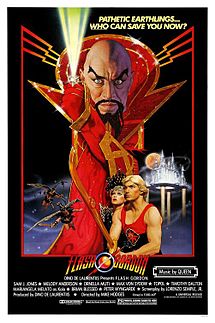
Perhaps they are laudable aspirations but sometimes it just feels a bit like a Flash Gordon plot...  Ming the Merciless is going to destroy us but Gordon will be our saviour!

Maybe it's a generational thing but surely corny 80's fantasy film plots and Queen songs weren't this influential?!?

Role Model Reality
Every great HR professional I work with just gets stuck in and makes the difference. There's no running around after the "shiny-shiny". There's no quantum leap to their blue sky thinking.

They earn their respect and place in the organisation through their actions and their quality of thinking.

Sometimes they are innovators.  Sometimes early adopters. Being an aspirational thought leader is not as important as being a good leader.  

They are trusted advisors and role models.  When they can't make a difference, they move on. They have purpose.

That's my experience; my reality.  What's yours?

The Blessed Effect
In the spirit of being lighthearted but serious this post has to be concluded with a very short clip of the quite wonderful Brian Blessed.  Perhaps HR could sometimes do with a bit more of him instead!

Thursday, 26 April 2012

Shwopping Learning

Walking to the L&D Connect Unconference at @LBiLondon this week I passed the above installation being erected against the walls of the Truman Brewery. The walls of the building are being covered in used clothing to mark the start of Oxfam's Shwopping Campaign in partnership with M&S.

The brisk wind was lifting the garments, giving a sense of natural order and belonging to the chaos of clothes. Beyond the message of recycling & valuing old clothes the experience of walking under the clothes was quite beautiful.

The concrete building behind the clothes probably once looked "new and shiny" but this didn't last. Now it is full of life, colour & texture. The 90 degree corner of the building, absent in our natural landscape, is now only hinted at. The natural elements and our ignored resources only now bringing the building to life.

It's funny how often joy & learning is to be found when we journey past our common expectations of order, uniformity and the immovable and experience the unexpected.


L&D Connect Unconference
As is often the way, the experience of the Shwopping Campaign installation was a foretelling of what was to come at the L&D Connect Unconference (#ldcu).

We are diverse. Largely through social media, an amazing & diverse group of professionals from across the UK to connect and discuss aspects of Learning & Development. The discussion was rich and great connections were made.

We don't need to follow convention. The Unconference format broke from the traditions of the corporate world and allowed the community to form and direct itself. The simplicity of the format allowed participants to look at things differently but collectively.

We are resourcefulWe didn't need "new & shiny" additional resources - just our energy & willingness to share & create. It allowed us to look at things differently whilst still valuing much of the order and structure that already exists.

With a little imagination, effort & the right stimulus, communities can lead change and have a great impact.  When it happens it's quite beautiful!

Blog Links
You might also like to explore these links relating to the L&D Connect Unconference :

Sukh Pabial, aka @naturalgrump, wrote this about the First LnDConnect Unconference.

@MartinCouzins also captured on video delegates reactions and takeaways and and has previously written about the Conference vs Unconference format.

Ian Pettigrew, @KingfisherCoach, provided us with this great Storify of the day.

@StellaCollins shared this from Jeff Hurt on Old Conference Education Memes


Thursday, 19 April 2012

15

Did you know that ...
  1. Fifteen is the smallest natural number with seven letters in its name.
  2. 15 is the atomic number of phosphorus.
  3. In Judaism various celebrations start on the 15th day of the month.
  4. There are 15 players in a team in Rugby Union & major Gaelic games.
  5. There are 15 days in each of the 24 cycles of the Chinese calendar.
  6. Interstate 15 is the freeway that runs from California to Montana.
  7. In backgammon, each player has 15 checkers at the start.
  8. Jamie Oliver established the restaurant "Fifteen" to give unemployed young people a chance to have a better future.
  9. The rock band Wire had a song called "The 15th".
  10. American singer Taylor Swift had a song called "Fifteen"
  11. 15 is the number of minutes in a quarter of an hour.
  12. 15 is the number corresponding to The Devil in tarot cards.
  13. The words "uncopyrightable", "dermatoglyphics", "misconjugatedly", and "hydropneumatics", all have 15 letters and are the longest words in the English language that do not repeat a letter.
  14. In 1968 Andy Warhol said that "In the future, everyone will be world-famous for 15 minutes".
  15. My wife and were married 15 years ago today.

Happy Anniversary darling!  I love you.

Monday, 16 April 2012

Bigger, Better, Faster, More?

Here I am just before my son's swimming lesson and we're talking about what he wants to concentrate on today. He wants Bigger, Better, Faster, More!

I'm not a swimming teacher but I can see that all his enthusiasm and love of the water is actually having a negative impact on his swimming ability. What he wants is to swim as fast as he can and race his friend up and down the pool. Yet, the more he tries to swim quickly the less likely it is that he will actually swim fast. It's frustrating him.

We talk about what's getting in the way and how he could achieve his goal of swimming faster. Trying to go quicker ironically isn't the solution and he knows it. He's got an idea...

He gets in the pool and swims his first length slowly. I mean real slow. The kind of slow that feels agonising to watch.

Here's the thing though. Having swum a length, he sees that he's not really much slower than when he goes helter skelter. His swimming though is effortless and something clicks.

During the lesson he tries a little experiment - all his own invention. He tries swimming fast and swimming slow and he notices the feedback from his teacher. Sure enough, slow works pretty well and praise is forthcoming. Fast is when the teacher critiques.

In the car he's tells me about his little experiment. His conclusion is easily made - "I need to stop trying to go so quickly and slow down. When I slow down, I can concentrate on my technique and that's how I'll build my speed."

I could see it. His teacher could see it. Sheesh most of the pool could probably see it!

However, he needed to see it. He needed to find a different way of behaving to reach his goal. He needed to make the change himself.

What made it happen?

There was a caring conversation. There was a safe environment. There was an expert on hand to give feedback and even critique. He'd had a good day. He was enjoying learning. He was willing to experiment. The sun was shining. All these things surely helped.

Each and every one of is capable of doing similar.

Perhaps sometimes we all need to behave a little differently. Perhaps sometimes we all need to seize the moment and experiment. Perhaps sometimes we all need to let go of the Bigger, Better, Faster, More?  

Monday, 2 April 2012

The Pseudo-Intellectual Blog-Bomb of Ignorance


Do you know what really bugs me?  Bloggers who don't participate in the debate or discussion they started. 

It's like they've lobbed a pseudo-intellectual blog-bomb into the ether then scurry away to hide in their blog-bunker.  Jumping onto the zeitgeist bandwagon the sycophantic plebeians of social media swarm around their blog like it was the greatest thing since god knows what.  Unwittingly feeding the behaviour and encouraging more blog-bombing.  WTF?

Perhaps it's ignorance... Perhaps if we don't tell them engagement is an interesting dance between people they won't ever know?  That their beautifully crafted bouquet of a blog is in fact a Pseudo-Intellectual Blog-Bomb of Ignorance.

Perhaps standing up and defending what you have to say is hard work...  Perhaps being brave enough to listen and change your views doesn't come easy...

Guess what?  IT'S NOT MEANT TO BE EASY.  It's called authenticity.  It's called integrity.  It's where you'll find respect.

Perhaps the audience get something from this reverse monologue...  I don't.  Would you write a message or talk to a book?  No!  Then why would you engage in a monologue with a blog post?  I'd much rather have a meaningful conversation or debate with people who can do more than just vomit into a blog and suck up the adoration of the star-struck.

It's my personal opinion of course but I'm happy to look at it through your eyes and learn something new.

Oh and if you're reading this thinking it's just David having a bit of a rant, I'm not.  I'm initiating a dialogue with you and I'd love to hear what you have to say.  You know where to find me!

Friday, 30 March 2012

Who complains about Professional Conduct?

Earlier this week I picked up on a few tweets about the @CIPD revised Code of Conduct. There's also a good article (& comment) over on People Management. You may have seen some of the exchanges on Twitter between myself and @FlipChartRick, @MJCarty and @RobertBlevin. For a mini case study touching on the subject you might appreciate this post from @FlipChartRick - "The BNP HR Manager"

Me & the EMCC 
As a member of the EMCC I readily abide by their Code of Ethics - it's a standard that is important to me personally and as a professional. It's supported by a Complaints Procedure that can be used to investigate complaints of professional misconduct by EMCC members. 

I believe these are both important underpinnings for a professional body like the EMCC. It's sets expectations and helps protect standards for both the profession as well as clients themselves. Yet in all my encounters with fellow EMCC members, I've always felt that they joined because they hold these standards dear. They are in my eyes the least likely to deliberately breach the Code of Ethics. 

Enforcing Standards 
By it's very nature, the membership and exposure to the HR agenda is much greater for the CIPD than the EMCC. However, I was surprised when @FlipChartRick asked on Twitter "How often are people chucked out of the CIPD and what for?" and @CIPD responded "Rarely, but has happened in case of serious breaches - typically where law’s been broken". 

I'm very supportive of both the wording and the intent of the CIPDs Code of Conduct.  However, I wonder what this revised Code of Conduct heralds? 

The Case for Standards 
Codes of Conduct & Professional Standards supported by an appropriate and diligent Complaints Procedure make perfect sense. Why wouldn't you have them if you were serious about standards of practice? 

These don't have to brought into play only when there is a breach of the law. For me this is a sign of a professional body who cares about the practice of the profession rather than protecting its membership. 

The Conundrum 
I think there is a conundrum here especially with regards to complaints...

Members are likely to work within the Codes of Conduct as a matter of course. Those members who don't are not likely to complain about themselves. Do fellow members feel inclined to complain about each other? 

Non-members be it individuals or organisations are most likely unaware of any Code of Conduct. Effort can be made to make non-members aware of what Conduct is expected of members but few organisations actively go out of their way to seek & encourage complaints. So who will complain? 

Perhaps this is why historically CIPD has not seen many cases of expulsion due to serious breaches... 

What do you think?
Do Codes of Conduct really make a difference to standards? I think they do if you are personally inclined to maintain appropriate professional standards. They act to guide your practice. 

Do they encourage legitimate complaints to be made to deal with transgressors? If not then how do professions seek out and deal with poor practices?  What do you think?

Friday, 23 March 2012

Friday Wondering - Why don't we say hello?


Each Friday I'm posting a "Friday Wondering". These posts are meant to explore & discuss observations or issues which I think would benefit from discussion. Participation is open to absolutely anyone regardless of their expertise or knowledge. Just bring your curiosity!

If you'd like to discuss on Twitter rather than here then why not. It would help though if you could use the #FridayWondering hashtag. Thanks!

Why don't we say hello?
We probably spend most days passing strangers in the street without acknowledging them let alone saying a "hello" or a "good morning/afternoon".  Yet on Twitter we'll quite happily approach or engage with people we've never spoken to before.

Have you ever passed someone in the street and just said "good morning"?  Isn't it wonderful when that look of shock (a stranger actually spoke to me!) turns into a smile and the silence is broken with a "good morning" back.

So why don't we say hello?

Tuesday, 20 March 2012

Mapping the Mind

Back in January I ran a competition to celebrate the 1st anniversary of this blog.
Nominated by Ian Pettigrew (@KingfisherCoach) the lucky winner Bev Holden (@stickythinker) won a ticket to the EMCC UK 1 day Symposium "Mapping the Mind".  Bev has written a superb guest blog post about her experience - I hope you enjoy it!


Mapping the Mind 

Clutching my metaphorical "golden ticket", I joined EMCC UK members for the Manchester Symposium on Thursday 15th March, thanks to a thoughtful nomination by Ian Pettigrew (Kingfisher Coaching), suggesting that I would be the deserving recipient of David’s “spare” ticket, and apparently I was! 

So, for those of you that couldn't make it to the event, and even for those of you who did, I’ve captured some of my reflections about the day. I haven’t attempted to share the expert content in any detail; the EMCC will make it accessible to those who are interested in knowing more. These are my “afters,” the thoughts and questions I have been left with so far, as I suspect the non-conscious part of my brain will be cogitating for a while longer and firing unexpected questions into my consciousness over the coming days and weeks. Fitting it all into a blog-sized nutshell has been taxing to say the least, so I’ve left quite a lot of things out – they do say “less is more.” 

This was my first exposure to Psychodynamics and Catherine Sandler painted a picture that had great resonance for me, describing a reality where a person knows they need to change, truly wants to change but finds it difficult to break through entrenched patterns of thinking and behaviour. I imagine most coaches have come across someone who fits this description. 

Chris Samsa brought us positive psychology, interesting evidence from the world of neuroscience, and some hugs (I should probably explain that the hugging was all about raising oxytocin levels to help us be more effective at solving problems creatively.) There was lots of content that helped me recall some of what I know and use from the field of NLP too. 

With Danielle Grant we explored the meaning of life, IQ, EQ and SQ, authenticity and even neuro plasticity within the context of leadership, and she gave us the delightful term "authentic chameleon" to describe the leader who deftly adjusts their style to meet the needs of their people. 

The Mapping the Mind Symposium gave me some new information, asked me some challenging questions, and has left me with some really practical approaches I can build into my professional coaching practice. I have been able to "inter-twingle" my thinking on Psychodynamics, Neuroscience and Positive Psychology and Ego and here's where I've got to in my cogitations - if that's a word. 


Why business needs us to be good parents 

If we agree with the theory that our early life experiences shape the way we are as adults, and that we learn to deploy psychological defence mechanisms such as denial, repression, displacement, projection and idealisation to keep us psychologically safe and sound, then business really needs us to be good parents. 

It's these defence mechanisms that become our "hidden drivers" sitting below the surface, beneath the observable behaviour that we present to the world, that cause us to think, feel and behave in particular ways, sometimes creating great outcomes and other times sabotaging our success. It's these hidden drivers that coaching with the psychodynamic approach can bring to the surface, building self-awareness in the client and being the catalyst for personal change. 

If we provide our children with a happy, stable and enriching childhood, what are the "hidden drivers" that we are shaping for the future? And I've made a leap in my thinking that leads me to suggest that if parenting is done well, maybe we won't need coaches to help people in organisations to perform well as adults? I suspect I'm taking a far too simplistic stance on this one...... 


Why we might need to rethink how we use trusted coaching models 

Chris Samsa's insight into neuroscience and positive psychology left me feeling inclined to revisit some of the coaching models I have relied on so far, and find ways to incorporate his very elegant SCARF model into what I do. 

We risk reinforcing negative and less helpful thoughts, feelings and behaviours by encouraging our clients to describe their current reality in vivid terms, as a source of information upon which to begin searching for a future ideal. This places too much emphasis on Away thinking rather than Towards thinking. 

In my experience clients find it very easy to describe what's happening now and what they don't want, (i.e. what they want to get away from) but are less able to create a vivid picture of what they want instead (i.e. towards) but it’s exactly this kind of thinking that shifts them from an unresourceful state to one where they can be more creative and innovative. 

I'm inclined to think that Away from thinking is less effective because it lacks direction, you can run away from something in any direction you like, and perhaps end up in a worse situation. I liken Towards thinking to the tractor beam on the Star Wars Death Star, it's both irresistible and compelling! 

What does make some people so reluctant to dream about the future and its infinite possibilities? What do we need to do differently as coaches to move our clients into a more positive state and would it speed the coaching process, and the pace of transformation, up if we did? 


Why managers need to let go of what they know 

Historically managers and leaders have acquired knowledge and held onto it as a way to keep them at the top of the organisational pyramid. With the pace of change accelerating and knowledge becoming accessible to the masses, it’s much harder to hold onto knowledge and for it to be relevant for very long! 

Organisations thrive when they are agile and responsive, when they are equipped to react appropriately to the pace of change and where everyone in the organisation is enabled to make it happen. How can an organisation behave that way if all the knowledge (and the power and control) is held by an elite group of individuals? 

One of our challenges as coaches is to help some clients let go of what they know by letting go of their ego, by thinking beyond their ego, which for me means they realise the success of the organisation is a combined effort, bringing together and leveraging the skills, experiences and abilities of a broad range of people under a visionary leader. 

There is also a place for the coach in helping team members to step up to the challenge of being empowered, so that the people who lead them have more confidence in their ability, making it much easier to let go......at least in Utopia if nowhere else! 

So, I hope this gives you a flavour for the event and I look forward to your comments. I'm very grateful to David and Ian for the opportunity to attend and now it’s time for me to time to turn thinking into action. 


Bev Holden is the co-founder and Director of The Clear Thinking Partnership. She and her business partner Kate Hargreaves work with clients to help them think more clearly, boosting individual and team performance and business success.

Friday, 16 March 2012

Friday Wondering - Does HR need courage?


Each Friday I'm posting a "Friday Wondering". These posts are meant to explore & discuss observations or issues which I think would benefit from discussion. Participation is open to absolutely anyone regardless of their expertise or knowledge. Just bring your curiosity!

If you'd like to discuss on Twitter rather than here then why not. It would help though if you could use the #FridayWondering hashtag. Thanks!

Does HR need courage?
I've noticed that many of my conversations with people in that broad house called HR have touched upon the need to act in their roles to break the norm.  To stand up to management.  To change the status quo.  To lead by example.  It often takes courage to be a leader of change.

However, the situations recounted often reflect the fact that senior management don't have the courage to change themselves.

So what do you think?  Does HR need to have courage to perform it's role fully?
Would acting with courage lead the way or would it give permission to other executives to follow rather than lead?

Thursday, 15 March 2012

The sound of someone not looking in the mirror

Did you hear about the Goldman Sachs ex-employee Greg Smith?  If you didn't then you obviously weren't on Twitter or the newsfeeds yesterday...

It's funny how a sensationalist story of bad behaviours in part of a global banking institution can overwhelm the newsfeeds.  To the extent that in all this hulabaloo many probably missed that there had been a 6.8 earthquake in Japan... 

What makes the soundbites of an ex-employee of a bank more important than potential further catastrophe in Japan?  I'm sure that along with many journalists we could all think of some good reason... but when I look at my kids it's not bankers ethics that I need to be worrying about is it?

I have a theory.  Gossip and warmongering aside, could the reason be that much of the world wants to pick at the ethics of bankers as a way of not looking at their own?

I'm not taking a moral high ground here, but wasn't the noise on Twitter yesterday just the sound of thousands not looking in the mirror at themselves?

Just a theory....